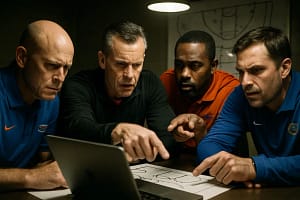
Gators Coaching Staff work before the 2026 season was built less around slogans and more around daily proof. By September 4, 2026, the public record from Florida’s offseason showed a staff trying to reset standards through conditioning, position-room teaching, retention, and a direct message: talent had to be matched by earned trust.
That matters in Gainesville because player development is never just a private staff-room topic. It shows up in how families talk about the program, how returning players carry practice habits, how young athletes learn the speed of SEC preparation, and how fans read the direction of a new era. Jon Sumrall’s first offseason at Florida was not presented as a finished product. It was framed as a build, one where every rep had a purpose.
The available research is stronger on coaching methods than on measurable September results, so any fair read has to stay grounded. We know what the staff emphasized. We know several key personnel moves. We know some of the returning leaders who gave Florida a base. What cannot be claimed yet, without verified game results and full internal metrics, is that the offseason plan has already solved every competitive question.
How The Gators Coaching Staff Set The Standard
Florida’s shift began with accountability. On January 29, 2026, Sumrall instituted a policy that players would not receive Florida-branded gear until they had “earned the logo” through offseason workouts. The symbolism was clear: the Gator mark was not handed out as a welcome gift. It had to be backed by effort, attendance, toughness, and buy-in.
By March 2, 2026, Florida’s official athletics site described Sumrall shifting the program’s energy toward the field while culture-building work included an offseason conditioning test called “The Gauntlet” and a revamped weight room under director of football performance Rusty Whitt Florida’s spring camp primer. That date is important because it captured the program between winter work and spring football, the narrow window when new staffs can turn words into routine.
Gators Coaching Staff Accountability Started Early
The “earn the logo” approach carried a familiar college-football edge. It was not about denying players comfort for the sake of theater. It was a way to make shared standards visible. In a locker room with returning players, transfers, and new staff voices, small markers can help define who is all in before the first depth-chart argument begins.
For a community that follows every change in Gainesville, that approach gave fans a clear first read on Sumrall. He did not begin by promising style points. He began by asking players to prove habits. That is often where coaching legends, across sports, make their first mark. The wins are public later. The standards are private first.
Weight Room Work Became A Teaching Tool
Whitt’s presence gave the development push a hard physical center. The research notes identify him as a military veteran with more than 25 years of experience and a blunt philosophy built around toughness. His line, “Weak things break,” fit the tone of an offseason shaped by conditioning, adversity, and repeatable strain.
In player development, strength work is not separate from football learning. It affects how offensive linemen anchor, how defensive backs recover, how running backs absorb contact, and how younger players learn the difference between high school dominance and SEC endurance. Florida’s revamped weight room became more than a facility note. It became a place where the staff could measure who responded to hard days.
Position Rooms Became The Development Lab
The most meaningful coaching work often happens away from the podium. It happens in position rooms, during correction periods, and after a missed assignment that has to become a teachable rep rather than a repeated mistake. For the Gators, the offseason notes pointed to several areas where development carried extra weight.
The offensive line was one of the clearest priorities. During Sumrall’s spring and summer period in 2026, the group returned only two players with previous Florida starts. That kind of turnover can slow an offense if communication, technique, and strength do not come together quickly. The research notes pointed to transfers Harrison Moore from Georgia Tech and T.J. Shanahan from Penn State as important figures in raising weight-room and practice standards.
Offensive Line Growth Required Urgency
Offensive line development rarely gives a staff shortcuts. Five players have to learn footwork, calls, leverage, timing, and trust. One missed pickup can make a quarterback look rushed. One lost double-team can flatten a drive. That is why a line room with limited returning Florida starts became a daily test of the staff’s teaching pace.
For Florida’s coaches, urgency did not mean rushing the foundation. It meant creating enough quality repetitions for a group to speak the same football language. Transfers can bring experience, but they still have to learn new calls and new teammates. Younger linemen can bring energy, but they still have to grow into SEC bodies and SEC decision-making. That is where coaching patience and pressure have to meet.
Defense Was Built Around Player Strengths
On defense, coordinator Brad White and safeties coach Chris Collins arrived with an emphasis on shaping the defense around player strengths. The research notes say they paced scheme installation with intention, giving both new and returning players a firmer base before adding too much at once.
That approach is significant because defensive teaching can overload players quickly. A staff can have the smartest call sheet in the building, but if players hesitate, speed disappears. Florida’s defensive development plan, as described in the offseason notes, leaned toward clarity first. That can help safeties communicate, linebackers fit gaps with less doubt, and edge players attack without thinking through too many branches at the snap.
Staff Changes Put Relationships Under Pressure
A new head coach almost always brings new voices, and Florida’s case was no small adjustment. Sumrall brought in a largely new staff, with key hires including Buster Faulkner as offensive coordinator and Brad White as defensive coordinator. CBS Sports reported that most of the staff was new or had been new as of late 2025, with veteran Gerald Chatman the lone on-field assistant retained CBS Sports on Florida’s rebuild.
That much change can create energy, but it also tests continuity. Players have to learn new terminology. Coaches have to learn personalities. Position groups have to sort out which leaders can carry the room when the staff is not standing over every rep. The Gators Coaching Staff had to build credibility fast without pretending that trust appears automatically.
Retention helped. Research notes show running backs coach Chris Foster had an important role in retaining lead back Jadan Baugh, who rushed for 1,170 yards and eight touchdowns in the 2025 season. By April 2026, Florida had retained five key starters from the 2025 roster: Baugh, receivers Vernell Brown III and Dallas Wilson, linebacker Myles Graham, and edge rusher Jayden Woods. Those names gave the new staff more than talent. They gave the locker room reference points.
- Returning production: Baugh’s 2025 rushing output gave the offense a proven player to build around.
- Skill-position continuity: Brown and Wilson gave the passing game familiar targets during staff transition.
- Defensive anchors: Graham and Woods helped preserve leadership on that side of the ball.
- Staff credibility: Retaining key players gave new coaches a chance to teach from a base rather than a full reset.
That type of retention also connects to a broader Gainesville sports conversation. Florida basketball readers have seen how continuity can shape development, and the same theme runs through football turnover; our recent look at Gators roster stability tracks why keeping core players can steady a program during change.
Why Development Still Had To Be Measured Carefully
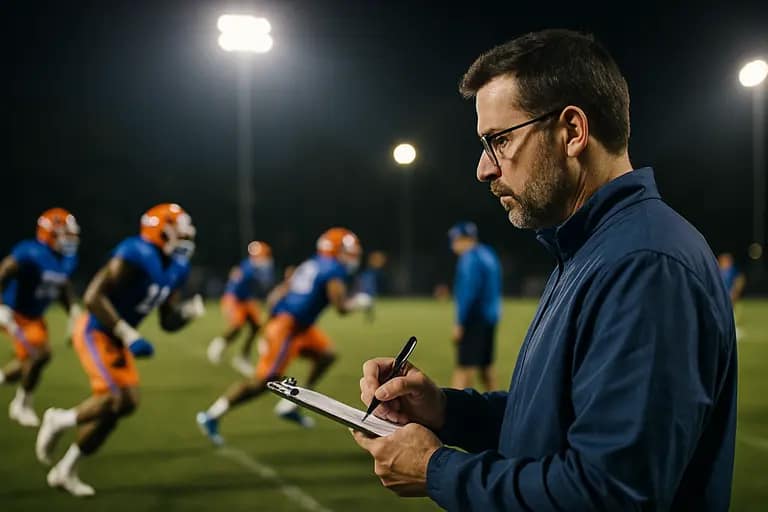
Spring and summer practices can reveal habits, but they do not offer full answers. Mock practices and fast-paced drills, according to the research notes, were used by coordinators including Faulkner, White, and Johnathan Galante to raise readiness and leadership, especially among quarterbacks and receivers. That kind of work matters because it forces players to think, align, communicate, and respond at game speed.
Still, the fairest evaluation has to separate process from proof. Conditioning tests can show commitment. Weight-room gains can show body changes. Retained starters can support continuity. Faster practices can sharpen command. But game situations are the public exam. Red-zone decisions, third-down communication, protection calls, substitution discipline, and late-game poise are where the offseason either holds up or gets exposed.
That is why the strongest takeaway from the Gators Coaching Staff offseason is not a prediction. It is a profile of priorities. Sumrall’s staff stressed accountability, physical preparation, position-specific teaching, and relationship building. Those choices did not guarantee instant answers, but they gave Florida a clear framework before competition began.
Community Buy-In Starts With Visible Standards
Gainesville is not a passive sports town. Fans notice who stays after practice, which freshmen earn early praise, how transfers speak about the locker room, and whether the head coach’s message sounds the same in January as it does in July. A development plan can help unite that audience because it gives people something real to track beyond scoreboards.
For young athletes around the state, the message is just as direct. Florida’s offseason under Sumrall said that branding follows work. In a college sports world where attention can arrive quickly, that is an old-school lesson with modern value. Coaches can recruit talent, but they still have to teach the daily behaviors that let talent survive pressure.
What Gators Coaching Staff Development Means In Gainesville
The story of Florida’s 2026 offseason was not simply that a new staff arrived. It was that the staff tried to make player development the operating language of the building. The gear policy, “The Gauntlet,” weight-room demands, paced defensive installation, offensive line urgency, and retention of key starters all pointed toward the same idea: the program wanted earned identity before public praise.
For a site rooted in Florida basketball and Gators community pride, that theme travels well across sports. Great programs are rarely built by talent alone. They are shaped by coaches who know when to push, when to teach, when to slow installation, and when to let leaders inside the locker room carry the standard.
The Gators Coaching Staff entered the 2026 season with questions still to answer on the field, but its offseason gave Gainesville a clear view of the plan. Development was not framed as a poster on a wall. It was framed as gear earned, reps repeated, bodies tested, relationships protected, and standards applied one day at a time.
