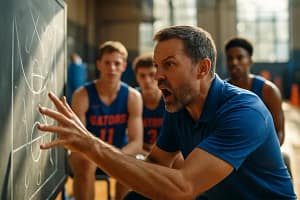
Gators Freshmen Development has become more than a practice-court slogan in Gainesville. After the NCAA moved toward a five-year eligibility model for the 2026-27 academic year, the old freshman question changed. Coaches no longer have to treat a first-year player as a redshirt puzzle before they treat him as a basketball player. That matters for Florida because championship programs are rarely built only through older transfers or one late recruiting win. They are built through daily habits, role clarity, and freshmen who learn early what winning possessions feel like.
The Gators basketball lens is simple: if a freshman can help in a two-minute stretch, defend a screen, rebound through contact, or handle a hard coaching correction, he has value now. The sport has moved fast, but the best programs still need a teaching core. Florida’s staff does not have to promise every newcomer a starring role. It does need to create a path where young players understand why each rep counts, how depth is earned, and why a crowded frontcourt can be a classroom instead of a traffic jam.
Gators Freshmen Development And The New Clock
The timing matters. On July 21, 2026, Vanderbilt head coach Clark Lea discussed the new NCAA eligibility rules and said the change strengthened the developmental path because more freshmen could be used immediately, while keeping players in a program for four to five years became even more valuable, according to Yahoo Sports. Lea was speaking about football, but the roster logic reaches every college program that depends on practice competition and long-range player growth.
Why Five Years Change Freshman Minutes
Under the old redshirt conversation, coaches often had to choose between short-term help and long-term eligibility. A freshman who could contribute in limited spots might still sit because preserving a season carried more value than a handful of game minutes. The new model changes that math. It does not guarantee playing time, but it gives coaches more freedom to find out who is ready.
For basketball, that can mean a first-year big playing a short defensive shift against a physical opponent. It can mean a guard getting late first-half minutes to protect a starter from foul trouble. It can mean a wing learning how speed changes from scouting report to live SEC possessions. Those small windows matter because freshmen often do not grow in a straight line. They grow after getting beat on a cut, missing a box out, hearing the correction, then getting the same action right two days later.
What Football Examples Tell Basketball Coaches
The national conversation has been driven heavily by football, but the player-development lesson travels well. CBS Sports reported that Houston freshman quarterback Keisean Henderson, the No. 1 recruit in 2026, showed poise and open-field play in spring practice, while returning starter Conner Weigman remained ahead on the depth chart and the staff designed packages to get Henderson into games during the 2026 season, according to CBS Sports. That is a useful model for basketball: develop a freshman without pretending he has to carry the team.
Florida can apply that same idea in quieter ways. A package in basketball might be a defensive matchup, a rebounding lineup, a rim-running role, or a short stretch where a freshman is asked to do two things well rather than eight things halfway. Gators Freshmen Development should be judged by whether young players become more trusted, not by whether they become instant headliners.
Roster Building Around Newcomers In Gainesville
The transfer portal has made roster construction more urgent, but freshmen still give a program its internal rhythm. They push veterans in practice. They absorb the vocabulary of the staff. They form the next layer of leadership if they stay. A program that wants to remain in the championship conversation needs both older reliability and younger upside. One without the other can leave a roster either too thin for March or too unstable for November.
Gators Freshmen Development In Practice
That is where Gators Freshmen Development becomes a daily story instead of a recruiting graphic. Florida’s young frontcourt players have already been framed on this site through the lens of hard practices, real-time corrections, and a crowded front court before the 2026-27 season in a closer look at Gators freshmen bigs. That kind of setting can be uncomfortable, but it is also where roles start to take shape.
A freshman big does not need to master everything by September 17, 2026. He needs to learn the floor map: where to be in drop coverage, when to tag a roller, how to seal without fouling, when to sprint into a ball screen, and how to keep playing after a missed finish. Those are not glamorous details, but they separate a deep team from a top-heavy one. Florida’s community knows the difference because Gainesville has seen what connected teams look like when postseason pressure arrives.
Retention, Transfer Balance, And The Freshman Track
USC men’s basketball coach Eric Musselman described a similar roster blueprint in early 2026: keep key returners, bring in high-upside freshmen as future anchors, and use the transfer portal selectively to fill immediate holes. That is not a Florida-specific quote, but it captures the same challenge facing major college basketball programs. The portal can solve a need. Freshman development can shape an identity.
For the Gators, the practical question is not whether freshmen or transfers matter more. The answer is both, but on different timelines. Transfers can stabilize a rotation right away. Freshmen can raise the ceiling of future teams if they are taught with patience and held to a clear standard. In a league as unforgiving as the SEC, the best young players are not simply protected; they are prepared.
Development Details That Win In March
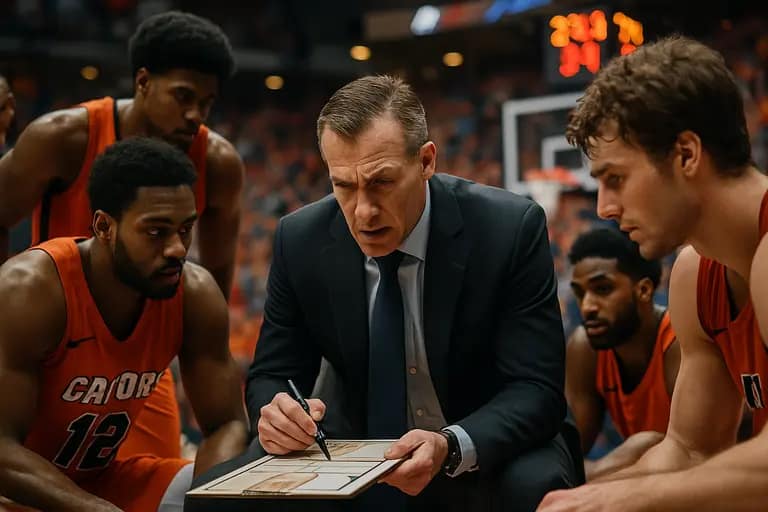
March basketball rewards teams that can survive foul trouble, bad shooting nights, and scouting adjustments. That is where freshmen who have been tested early can matter. A coach may not need a first-year player to score 15 points. He may need him to guard a switch, finish a defensive possession, or make the simple pass that keeps the offense moving.
Minutes Are Not The Same As Trust
Maryland’s 2025 freshman experience offers a useful teaching point from the research record. Several true freshmen were pushed into major roles, and quarterback Malik Washington set school freshman records in 2025 with 273 completions, 2,963 passing yards, and 17 touchdowns while topping 200 passing yards in 11 of 12 games. Maryland coach Michael Locksley scaled back Washington’s first-year responsibilities to control the learning curve, then planned a more aggressive spread offense in 2026. Again, that was football, but the principle fits basketball: early minutes work best when the assignment is clear.
Basketball freshmen can struggle when every possession feels like an exam covering the whole syllabus. A sharper approach asks a newcomer to win a smaller battle first. Set the screen. Talk on defense. Run the lane. Hit the glass. Make the next pass. Then the role grows. Gators Freshmen Development should follow that kind of staircase, because trust is earned possession by possession.
The Community Side Of Player Growth
There is also a Gainesville angle that should not be brushed aside. Fans often meet freshmen as names on a roster, then learn them through effort plays at the O’Connell Center. A young player who dives on the floor, takes coaching, and improves by January can become part of the local sports conversation in a real way. Families notice. Students notice. Youth players in North Central Florida notice.
That connection matters because college basketball is still local at its heart. Player development is not only about producing future pros. It is about giving a community a team it can watch grow. The freshmen who arrive raw and leave stronger, smarter, and more dependable become part of the program’s shared memory. That is how depth turns into identity.
Why Gators Freshmen Development Matters Now
Gators Freshmen Development matters now because the calendar and the rules both favor programs that teach quickly without rushing blindly. The five-year eligibility shift gives coaches more flexibility, but flexibility only helps if the staff has a plan. Florida’s opportunity is to turn freshmen into dependable pieces before the season’s hardest moments ask for them.
The championship view is not complicated. A roster with veterans, selective portal additions, and freshmen who are learning fast has more ways to win. Florida does not need to force young players into oversized roles to prove a point. It needs to give them meaningful work, honest correction, and enough competitive reps to find out who can help. If the Gators get that balance right, the future will not feel distant. It will show up first in practice, then in short rotations, and eventually in the kind of late-season depth that wins hard games.
