
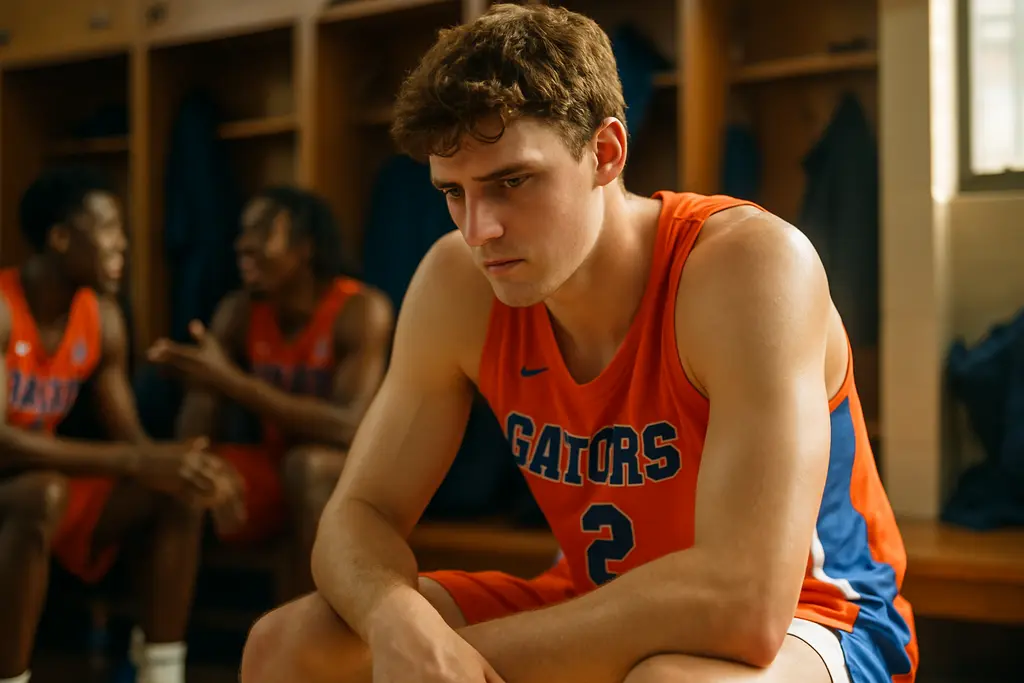

Thomas Haugh leadership became a defining Florida basketball story on April 21, 2026, when he chose to return to the University of Florida for his senior season instead of entering the 2026 NBA Draft. For a program that measures its best players not only by scoring totals, but by how they carry standards from one team to the next, Haugh’s choice put him in a rare lane: a proven college star with a professional path in sight who stayed in Gainesville for one more run.
Thomas Haugh Leadership And The Senior Choice
Haugh’s announcement on April 21, 2026, was official: he would stay at Florida for his senior season rather than enter the draft pool, after a junior year that brought first-team All-SEC honors, Julius Erving Award finalist recognition, and All-America status from multiple selectors Florida’s announcement. That single decision carried more weight than a typical roster note. Florida had just come off a 27-8 season, an SEC regular-season title, and a No. 1 seed in the 2026 NCAA Tournament, according to the research record. Keeping its top returning figure changed the way the roster could be read before the 2026-27 campaign.
A Decision That Reached Beyond The Draft
The point of Thomas Haugh leadership is that it did not show up only in late possessions or box scores. It appeared in the choice to remain connected to a college team when the professional track had opened. The research notes say he was projected as a lottery pick, meaning Top 14 in mock drafts, before the 2026 NBA Draft. They also state that estimated rookie earnings at the bottom of the lottery exceeded $26 million over four years. That context matters because it shows the scale of what Haugh paused.
His stated reasons, as reported in the research, were not vague. They included chasing another national title, playing beside teammate and friend Alex Condon, staying close to his younger siblings, and reaffirming his bond with the Florida program and coach Todd Golden. The Washington Post account connected his return to those personal and team factors Haugh’s return report.
Why Gainesville Felt The Impact
Florida basketball has always carried a strong local pulse in Gainesville. When a player with All-America credentials stays, it gives the fan base a familiar face, gives teammates a senior voice, and gives the coaching staff a known production point. Haugh was not a theoretical prospect by April 2026. He had already logged three seasons, scored 1,111 career points, and ranked in the top 50 in program history, according to the official school record cited above.
That is why his senior return sat at the intersection of team ambition and community identity. Florida supporters had seen him grow from a frontcourt piece into a player trusted with major minutes and major shots. In college basketball, continuity can feel almost as valuable as recruiting momentum. Haugh gave Florida both a proven player and a story the community already understood.
A Junior Season Built On Usage And Trust
Haugh’s junior year in 2025-26 gave Florida a clear statistical foundation. The research notes state he led the Gators in scoring at 17.1 points per game and also led the team in minutes at 33.3 per game. He averaged 6.1 rebounds and added 73 assists, 58 made three-pointers, 36 steals, and 33 blocks. Those numbers paint a player used in many parts of the floor, not just as a finisher.
Thomas Haugh Leadership In Late-Game Pressure
One of the clearest examples came on March 22, 2026, in Florida’s second-round NCAA Tournament loss to Iowa. The research says Haugh overcame a slow first half and scored 15 second-half points to fuel Florida’s comeback effort. The Gators still lost, and that result should not be softened. But the way Haugh responded after halftime showed the kind of player Florida trusted when the season was under stress.
That is where Thomas Haugh leadership separates itself from simple scoring. A player can lead the stat sheet without shaping the emotional temperature of a game. Haugh’s second-half response against Iowa suggested a player willing to absorb a poor start, stay active, and give his team a chance. For a historian of Gators basketball, those moments become part of the player’s file. They explain why a return season mattered beyond preseason rankings or draft talk.
The Move From Four To Three
Early in the 2025-26 season, Haugh shifted from playing primarily power forward, the “4,” to small forward, the “3,” according to the research notes. That move pushed him toward more wing responsibilities. It expanded his perimeter work, outside shooting, and NBA-style projection. The 58 made threes listed in the research did not stand alone; they fit a larger player-development path.
For Florida, the shift mattered because it gave the team lineup flexibility. For Haugh, it gave scouts a fuller sample of wing skills. For teammates, it meant playing beside a forward who could stretch defenses while still rebounding and defending. His box score contributions across scoring, rebounding, passing, steals, and blocks showed a player with a growing all-court profile.
The Pro Track Without Leaving Gainesville
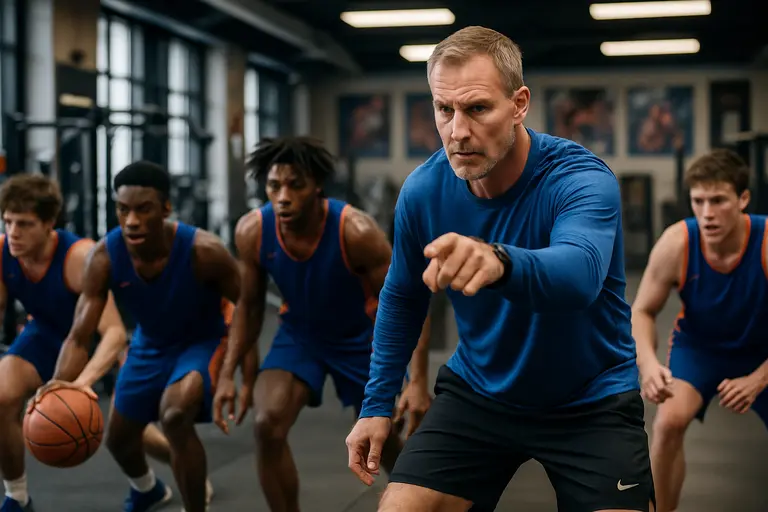
The category “From Gators to NBA” often brings to mind players who leave campus and begin their professional careers. Haugh’s case is different. His path toward the NBA did not stop when he stayed at Florida; it took another college turn. The research notes say he spent offseason development time training in California with NBA players and worked on shooting, drives, and finishing with his weak hand after Florida’s NCAA elimination.
Development As A Senior Asset
That kind of training detail matters because Haugh returned to school with pro feedback already shaping his work. A senior who has seen his name in draft projections, trained with professional players, and chosen a college locker room again can influence younger teammates in practical ways. He can model how to prepare, how to handle outside attention, and how to convert scouting questions into daily work.
Florida’s roster situation made that return even more meaningful. The research says the Gators brought back five of their top six scorers from the 27-8 season. Haugh’s presence gave that returning group a scoring leader, a high-minute player, and a senior with direct NBA interest attached to his name. For more on the same player-development thread, the site’s analysis of Haugh’s leadership role fits naturally beside this discussion.
- He returned after first-team All-SEC and All-America recognition.
- He led Florida in both scoring and minutes during 2025-26.
- He entered his senior year with wing development already part of his profile.
- He stayed after being connected to lottery-level draft projections.
Program Memory And The All-America Return
Florida has had very few players return after earning All-America honors. The research record names Joakim Noah, Udonis Haslem, and Neal Walk in that group with Haugh. That is a serious comparison point, not because their games were identical, but because all four names connect to different eras of Florida basketball standards. Returning after national recognition is not a common modern college decision.
Haugh’s decision linked the current Gators with older program markers. Noah is tied to national-title teams. Haslem is tied to toughness, frontcourt production, and a long professional identity. Walk remains one of the foundational names in Florida basketball memory. Haugh joined that return category with a chance to shape how his own senior season would be remembered.
What Thomas Haugh Leadership Means For The Gators
Thomas Haugh leadership now means Florida has more than a scorer at the center of its 2026-27 story. It means the Gators have a senior who chose college accountability after NBA attention, a player whose junior production came with heavy minutes, and a forward whose position shift gave him a clearer professional profile without pulling him out of Gainesville.
For the community, that matters. Gainesville gets one more college season with a player who has already climbed the program scoring list and tied his name to a rare All-America return group. The locker room gets a veteran who has lived through SEC title pressure, NCAA disappointment, offseason pro-style training, and a public draft decision. The coaching staff gets a player whose production is known and whose development still has room to show.
Haugh’s story also keeps the Gators-to-NBA connection grounded in college responsibility. Not every pro path requires the earliest exit. Sometimes the next step is another year of film, another year of leadership, and another year carrying a program’s expectations in front of the same home crowd. That is the value of this chapter for Florida basketball: a senior season built on proof, patience, and a player who chose to lead from inside the program.