
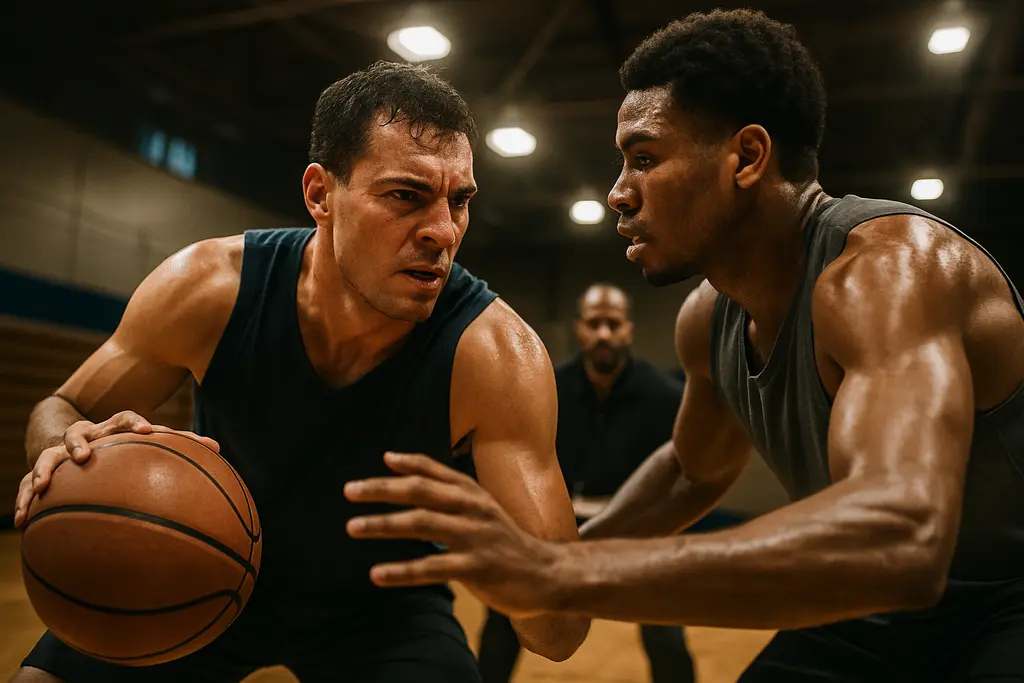

Gators Roster Battles will give Florida’s exhibition run its real value before the Nov. 2, 2026 opener against Miami in Tampa. As of Oct. 3, 2026, the games ahead are less about final scores and more about sorting roles, testing combinations, and seeing which players can carry practice growth into live possessions.
I have always viewed October basketball in Gainesville as a bridge between program memory and pro projection. The box scores may not sit in the record book with March wins, but the staff learns who talks on defense, who can handle the ball under pressure, who fits next to the best players, and who has an NBA-style trait that survives contact. For a Florida group replacing multiple guards from a 2025 NCAA title team while leaning on a deep veteran frontcourt, these exhibitions matter.
Gators Roster Battles In The Frontcourt
Why Gators Roster Battles Start Up Front
The frontcourt is the clearest place to begin because Florida has returning production, size, and professional interest packed into the same rotation. Thomas Haugh and Alex Condon both tested the 2026 NBA Draft process before returning, and the program framed their return as part of a larger offseason roster win Florida’s roster report. Haugh averaged a team-best 17.1 points and 6.1 rebounds in 2025-26, while Condon posted about 10.4 points, 7.5 rebounds, 2.3 assists, and 1.3 blocks per game.
That is not a simple starter-versus-bench question. Haugh’s scoring gives Florida a half-court release valve, while Condon’s rebounding, passing, and rim activity make him useful in several lineup types. Exhibition possessions should show whether the staff prefers them together for longer stretches or staggers them to keep one high-level frontcourt organizer on the floor.
Chinyelu Changes The Rotation Math
Rueben Chinyelu’s return gives Florida another anchor inside. The research available for this preview identifies him as the reigning National Defensive Player of the Year and SEC rebounding leader after averaging 10.9 points and 11.2 rebounds. His presence can change everything around Haugh and Condon because he gives the staff a true rebounding and defensive base.
For NBA scouts, this kind of frontcourt crowd is not a problem; it is a useful test. Can Haugh score without dominating the ball? Can Condon defend in space while staying active on the glass? Can Chinyelu keep his value high when spacing gets tighter? These are the details that exhibitions expose. The names are familiar to fans, but the role sorting is not finished.
Guard Minutes After A Championship Backcourt Reset
Fland, Aberdeen And The First Possession Question
The backcourt is where Florida’s staff may learn the most before Nov. 2. Boogie Fland arrives with strong ball-security data from 2025-26: 121 assists against 55 turnovers while averaging 11.6 points, according to the research notes. At 6-foot-3, he brings size to the lead-guard spot and a record of handling a full season’s responsibility.
Denzel Aberdeen’s case is different. He brings experience, scoring comfort away from the ball, and the kind of veteran steadiness coaches trust in tight stretches. The research notes also state that his case for a fifth season was under review, so any projection around his role has to carry that uncertainty. If he is cleared, the guard room gets older and more stable. If not, Florida’s younger guards have a much wider path to minutes.
This is where Gators Roster Battles become less about labels and more about combinations. A primary guard in Todd Golden’s system has to start actions, defend at the point of attack, and keep the floor spaced. A backup guard has to enter without changing the rhythm. In an exhibition setting, two turnovers in a row or one missed weak-side rotation can tell the staff a lot.
Lloyd And Klavzar Fight For Trust
Alex Lloyd’s sophomore step is one of the better developmental stories on this roster. He played in 21 games as a freshman and scored 21 total points, but the research describes physical and defensive growth that has placed him in the mix for a fourth-guard role. That is exactly the kind of spot exhibitions are built to settle.
Urban Klavzar, as a returning guard, sits in a different kind of pressure. He is likely in the eight-man core conversation, but he still has to show he can affect games through pick-and-roll reads, off-ball shooting, and defensive reliability. Florida does not need every guard to play the same way. It needs guards who can survive SEC pressure and complement a strong frontcourt.
Our earlier read on the Gators exhibition games treated the preseason as a depth check, and that idea fits this guard room. The staff is not just finding a pecking order. It is testing which guards make Haugh, Condon, and Chinyelu easier to play through.
Wing Depth And Perimeter Shooting Tests

Brown And Ingram Offer Different Answers
Isaiah Brown and CJ Ingram may be competing for similar minutes, but they do not bring the same profile. Brown’s late-season SEC stretch in the research notes included 6.6 points per game, 50.6 percent shooting, 41.9 percent from three, and 2.6 rebounds. Those numbers point to a player who can help a rotation without needing the offense to stop for him.
Ingram brings athletic tools and a football background, but the research notes make clear that decision-making and consistency remain areas to monitor. That does not make him a long-term project by default. It means exhibition minutes are valuable because they put him in the exact spots that practice cannot fully reproduce: transition defense, corner spacing, second-side drives, and quick reads after offensive rebounds.
The wing battle also ties directly into Florida’s pro pipeline. NBA teams value wings who defend, shoot, and process quickly. If Brown proves his shooting translates against exhibition pressure, his role becomes easier to define. If Ingram shows he can channel athleticism into disciplined possessions, the staff has a different kind of bench weapon.
Deep Guards And Bigs Can Still Shift The Board
Viktor Mikic and AJ Brown are not the headline names, but deep reserve roles matter across a long schedule. The research places both in the guard depth picture, where consistency could earn spot minutes when starters need rest. Those minutes can seem small in November, then become valuable during foul trouble or schedule pressure later.
Arturas Butajevas, a 6-foot-10 freshman, and Domen Petrovic, an international transfer, give Florida more frontcourt questions. The research notes that both have been integrating into practice settings and that Petrovic’s shooting has stood out. If either big runs the floor, communicates defensively, and finishes simple plays in exhibitions, the frontcourt rotation could stretch beyond the expected names.
Sports history at Florida reminds us that role players often reveal themselves before the public catches up. The first sign is rarely a 20-point night. It is a clean closeout, a hard screen, a quick extra pass, or a bench unit that does not lose ground. That is why these Gators Roster Battles deserve close reading before the regular season starts.
What These Gators Roster Battles Mean For NBA Development
The NBA angle sits under the college story, not above it. Florida’s immediate goal is to build a rotation that can defend, rebound, and score with balance. Still, the professional track is part of the conversation because Haugh, Condon, and Chinyelu have traits that scouts can measure against real opponents. Sports Illustrated’s roster glance also identified Haugh, Condon, and Chinyelu as major pieces in Florida’s 2026-27 frontcourt picture SI roster glance.
For Haugh, exhibitions can show whether his scoring carries in varied lineups. For Condon, they can highlight the passing and defensive range that make modern forwards valuable. For Chinyelu, the key is whether his rebounding and defense control the game without forcing the offense to shrink. Those are college needs first, but they also matter in draft rooms.
The guards have their own professional questions. Fland’s assist-to-turnover record gives him a base, but Florida will need him to organize talented bigs and keep the perimeter clean. Lloyd, Klavzar, and Brown have to show they can make open shots and defend with enough force to stay on the floor. Aberdeen’s status, if settled in his favor, could give the staff one more experienced option and raise the daily standard in practice.
For the Gainesville community, the appeal is not only who starts. It is watching a roster take shape in public, with veteran returners, transfers, young players, and NBA hopefuls all pushing each other. The best exhibition takeaways often come from the second unit, from the player who earns trust one possession at a time, or from the pairing that makes the arena feel the season’s shape before the opener. That is the real value of Gators Roster Battles before Miami on Nov. 2, 2026.