

Thomas Haugh Leadership became one of Florida basketball’s clearest storylines on April 21, 2026, when Haugh announced he would pass on a projected lottery NBA draft spot and return to Gainesville for his senior season. He pointed to Florida’s March 22, 2026, NCAA Tournament loss to Iowa as the memory he did not want to carry out of college, saying, “I didn’t want my last memory of Florida basketball to be that” Florida’s announcement. That decision set a tone that went beyond one roster move. It gave Todd Golden a senior forward with production, postseason scars, and the standing to challenge a locker room that entered 2026-27 with national attention.
Thomas Haugh Leadership And The Senior Standard
Production Created The Platform
Leadership in a high-major locker room sounds cleaner from the outside than it feels inside. Players do not follow speeches first. They follow habits, minutes, rebounds, defensive rotations, late-clock decisions, and how a veteran reacts after a hard loss. Haugh carried that weight because his 2025-26 season gave him the right to speak. He averaged 17.1 points and 6.1 rebounds, led Florida in scoring, and filled the box score with 73 assists, 58 three-pointers, 36 steals, and 33 blocks.
That balance matters for Florida. Haugh was not just a scorer asking teammates to feed him. He became a forward who could stretch a defense, rebound through contact, move the ball, and still defend enough actions to stay central in tight games. His All-American recognition in 2026 and First Team All-SEC honors from media and coaches reflected a player whose influence had crossed from useful to defining.
Why Thomas Haugh Leadership Now Carries More Weight
Thomas Haugh Leadership now carries more weight because it was chosen. Haugh could have left. Instead, he returned after a painful NCAA exit and put his name back inside the daily grind of practices, film sessions, scouting reports, and road tests. That choice gave Florida a rare kind of senior authority: a player who had NBA interest behind him but still had unfinished work with his college teammates.
The Iowa loss did not need to be dressed up as a lesson. It was a result that ended a season. Haugh’s response was the lesson. In a program trying to stack championship-level habits, a veteran returning after disappointment can steady the room in ways a new face cannot. Younger players see the price of standards. Returners hear the challenge from someone who has already carried a major scoring load.
Coaching Push From Todd Golden
From Quiet Example To Louder Direction
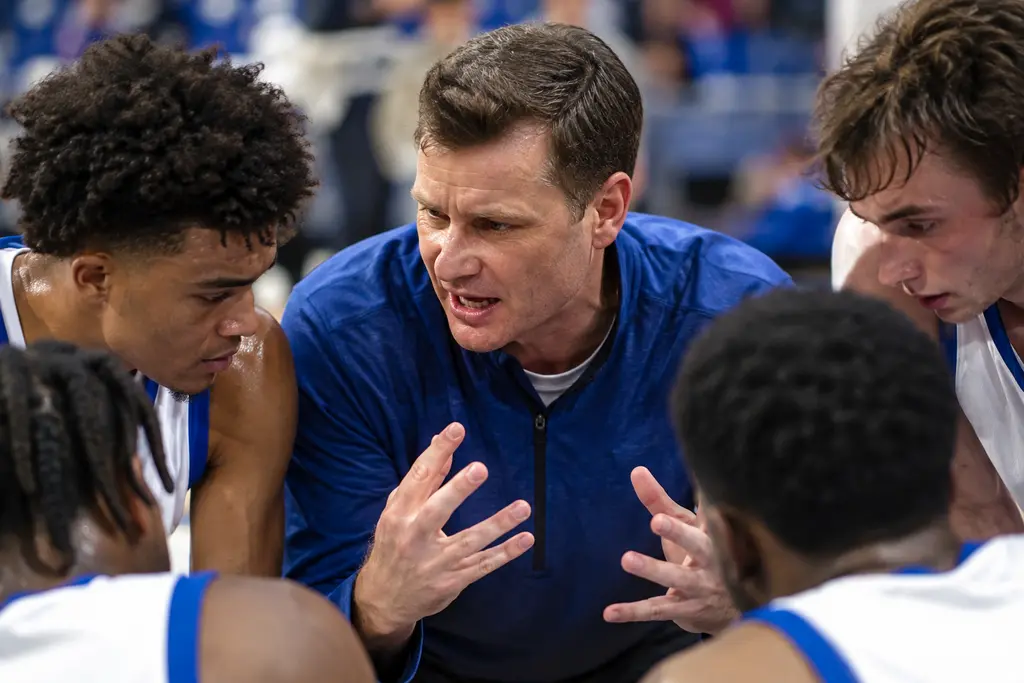
Todd Golden’s role in this story is not small. The coach had already seen Haugh produce at a high level, but the next step was different. During the October 2026 exhibition stretch, Golden challenged Haugh to lean into a louder voice. The coach noted that Haugh “wasn’t a natural vocal leader,” yet he had begun to communicate more in game settings, including exhibitions against Stetson and Baylor.
That is where Thomas Haugh Leadership fits the coaching side of Florida’s 2026-27 identity. Golden did not need Haugh to become a different personality. He needed the senior forward to use earned credibility at the right moments. In college basketball, the best teams often have a coach’s message repeated by players before a timeout is called. A senior who can correct spacing, calm a rushed possession, or demand a stronger closeout becomes an extension of the staff.
The Veteran Core Around Him
Haugh was not asked to carry the room alone. Alex Condon and Rueben Chinyelu returned as veterans with their own responsibilities, and Florida entered the 2026-27 season ranked No. 1 in the preseason AP Top 25 AP preseason poll. That ranking did not win a game, but it did place a bright light on how the Gators would handle status, pressure, and every opponent’s best shot.
For a deeper player-development read, our breakdown of Haugh’s senior scoring and poise tracks why his return mattered beyond the box score. The short version is simple: Florida had a player who could score like a star and still speak like a teammate who understood the whole building had a standard to meet.
How Experience Shapes The Locker Room
Position Flexibility Became A Teaching Tool
Haugh’s move toward more wing responsibilities before the 2025-26 season gave Florida lineup size and gave younger players a model. The shift was not just about where he stood on offense. It asked him to read different defenders, guard in space, make quicker decisions, and show younger teammates how a role can expand without losing team structure. Sophomore Isaiah Brown was one of the players positioned to learn from that adjustment.
That type of example often lands better than a lecture. A veteran who has changed his own game can speak with authority when a teammate is asked to accept a new assignment. Haugh’s value came from the fact that he had already done it. He had taken a different positional challenge and turned it into part of a stronger Florida profile.
Big-Game Poise Built Trust
Trust also came from March 30, 2025, when Florida beat Texas Tech in the NCAA Tournament’s West Region Final. Haugh came off the bench with 20 points and 11 rebounds, then hit two big three-pointers in the final three minutes as the Gators came back from a nine-point deficit. That type of memory stays inside a locker room. Teammates remember who looked comfortable when the season was shaking.
Those moments matter when a senior speaks during a tense stretch. He is not speaking from theory. He has felt the speed of a regional final, the tension of late possessions, and the demand to make a shot when one miss can change a season. That is the practical edge of experience. It gives words more force because the speaker has already answered in competition.
What Gainesville Sees In Haugh’s Return
A Senior Season With Community Weight
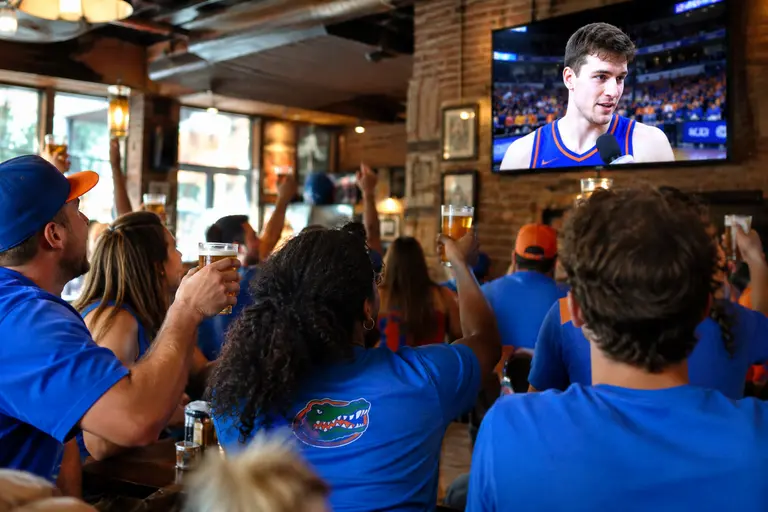
Florida basketball carries meaning across Gainesville because the program connects students, alumni, families, and local businesses around shared winter nights. Haugh’s return gave that community a familiar anchor after a season that included an SEC Championship and a No. 1 seed. The story was not only that a talented player stayed. It was that a senior chose to place team unfinished business above a faster jump to the professional level.
For a fan base that has seen championship teams built on shared responsibility, that kind of choice resonates. It gives parents a player to point to when talking about patience. It gives young athletes in the state a picture of development that includes staying, improving, and leading. It gives the student section a senior whose connection to the program is rooted in more than one hot shooting night.
The Coaching Legend Angle
Golden’s challenge to Haugh also fits the larger coaching story at Florida. Strong coaches do more than draw late-game sets. They identify when a player has earned enough trust to carry a message. By pushing Haugh and Condon to become louder leaders, Golden placed responsibility in the hands of players who had already shown performance, character, and experience.
That approach can define a locker room. Coaches set the values, but veterans enforce them between whistles. Haugh’s senior season offered Golden a chance to blend star production with peer accountability, a mix that championship programs need when talent alone is not enough.
Why Thomas Haugh Leadership Defines Florida’s Push
Thomas Haugh Leadership defines Florida’s push because it sits at the meeting point of scoring, maturity, coaching trust, and team memory. Haugh brought back 17.1 points per game, but he also brought back the sting of Iowa, the confidence of Texas Tech, and the daily knowledge of what Florida’s standard requires.
Nothing about veteran leadership promises a banner. College basketball is too demanding for that. What it can do is raise the floor of preparation and give a team a voice that players respect. For Florida, Haugh’s return meant the Gators had a senior forward who could lead by production, by adjustment, and by speaking more when Golden needed his message to come from inside the huddle.