
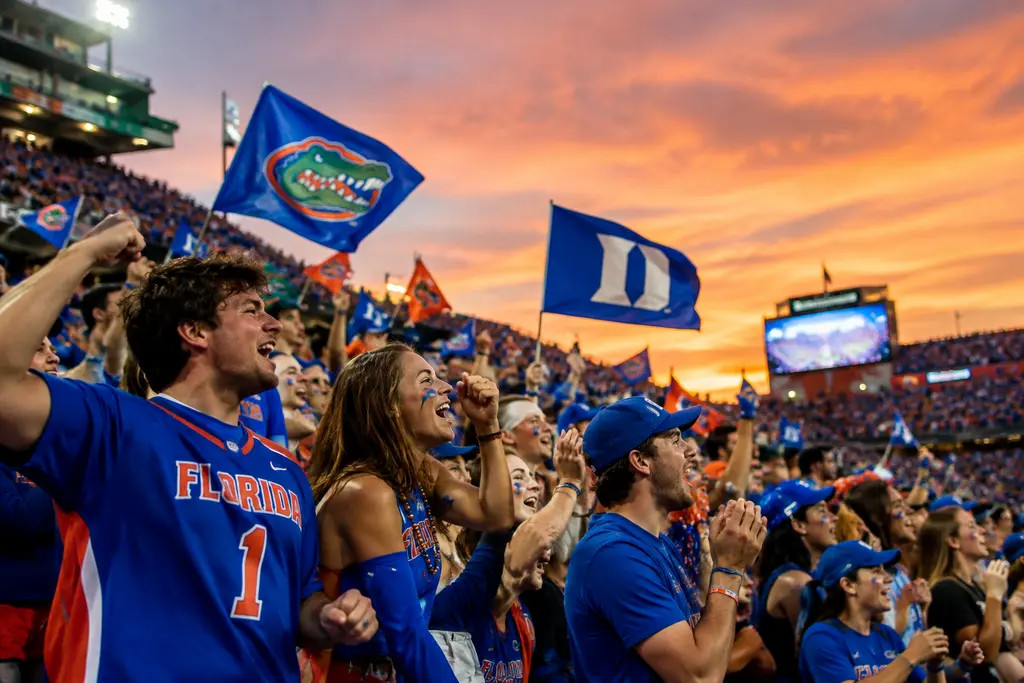

Gators vs Duke is scheduled for Tuesday, December 1, 2026, at 9:30 p.m. EST in Gainesville, with Florida hosting Duke at the Stephen C. O’Connell Center as part of the ACC-SEC Challenge, according to the official O’Connell Center event listing. That date matters because it is not just another non-conference game. It places the defending championship glow around Florida basketball beside one of the sport’s most consistent measuring sticks.
For a program that has lived through different eras of national respect, from the Billy Donovan championship standard to the current high-expectation group, this is the kind of matchup that tells the community where the team stands under bright lights. Florida entered the 2026-27 season ranked No. 1 in the AP Preseason Top 25, with Duke second. That ranking order gives the night a championship feel before the ball is even tipped.
Gators vs Duke Returns To Gainesville
The most striking piece of context is the gap between visits. Florida’s athletic department announced that Duke’s trip marks its first game at Florida’s home court since December 17, 1937, with the 2026 meeting set for the O’Dome in the ACC-SEC Challenge through Florida’s team announcement. That kind of gap changes the way a schedule line feels. It becomes a local basketball event with a long memory behind it.
Why Gators vs Duke Feels Different
Florida has hosted big games in Gainesville before, but this one carries a rare blend: a national brand opponent, a top-of-the-poll comparison, and a venue that can concentrate noise. The O’Connell Center is listed with a men’s basketball capacity of 10,151 after renovations completed in December 2016, so the setting is large enough to feel major and compact enough to keep the crowd close to the floor.
That is why Gators vs Duke is not just a schedule feature. It is a program checkpoint. Florida gets a chance to test its half-court discipline, frontcourt physicality, and late-clock poise against an opponent that has recently found ways to win this series.
The ACC-SEC Challenge Frame
The ACC-SEC Challenge gives the matchup a conference-pride layer without turning it into a conference game. For Florida, it sits inside a broader non-conference stretch that can shape national perception before league play. For Duke, the trip fits a demanding non-conference schedule that, according to the research notes, included several opponents connected to high NCAA Tournament seeding and final AP poll strength from 2026.
That setup should matter to players as much as fans. Early-season games with tournament-level traits test communication, rebounding habits, and lineup trust. I always look at these nights as a stress test for the things coaches preach in practice but cannot fully measure until the opponent has enough talent to punish every lapse.
Historical Context Behind The Series
Duke has controlled the all-time men’s basketball series, leading Florida 15-4 as of the last meeting listed in the research notes. That record is part of the story, but the recent margins give it sharper meaning. Duke won the December 2, 2025 meeting 67-66 on a last-second shot, and the Blue Devils have won four straight against Florida, including an 87-84 result in 2017.
Close losses can become fuel or a burden. The difference usually comes down to whether a team converts the pain into cleaner possessions. Florida’s task is not to rewrite the entire series in one night. It is to change the most recent pattern: strong enough to compete, not quite clean enough at the end.
What The 2025 Meeting Still Teaches
The December 2, 2025 game is useful because it was decided by one point. A one-possession result tends to expose details that are easy to skip in a box score: transition matchups, weak-side rebounding, shot selection after timeouts, and defensive balance after missed threes. In a matchup between elite programs, those details can be the difference between a court storming-type memory and a quiet walk back through the concourse.
The research notes from that meeting showed Duke entering with strong offensive indicators, including high scoring, rebounding, field-goal percentage, and three-point efficiency. Florida trailed in some shooting categories at that point. The rematch in Gainesville, then, is a test of whether Florida can bend the game toward its own strengths instead of letting Duke dictate rhythm.
For readers tracking the broader matchup stakes, our earlier breakdown of SEC-ACC Challenge stakes fits naturally beside this history because the 2026 game is tied to both national ranking pressure and Gainesville’s home-court identity.
Fan Engagement And The O’Dome Factor
The fan-engagement story should stay grounded. Social media growth can hint at interest, but the stronger evidence sits in the schedule, the opponent, the time slot, and the rarity of Duke coming to Florida’s home floor. A 9:30 p.m. start on December 1, 2026, asks the local crowd to bring late-night energy. In Gainesville, that can create a student-driven edge if the building is full and connected from warmups through the final media timeout.
Gators vs Duke Fan Engagement Markers
Gators vs Duke gives Florida supporters a clear rally point early in the 2026-27 season. The program is coming off a 2025 NCAA Champions team, per the research notes, and that matters for families, students, alumni, and local businesses around game night. Championship seasons widen the circle of people who feel attached to a team. The challenge is turning that widened interest into a loud, informed home crowd rather than passive curiosity.
- Students can shape the building’s tone by arriving early and staying engaged through dead-ball stretches.
- Alumni get a rare home date against Duke, a program that has not visited Florida’s home court since 1937.
- Local fans can treat the game as a Gainesville sports event, not just a national television matchup.
- The team gets a chance to feed off crowd pressure without letting emotion speed up poor shot choices.
That last point is where fan energy meets basketball discipline. A loud O’Dome can help Florida after a turnover forced, a contested rebound, or a run-out basket. But the Gators still have to guard without fouling, finish defensive possessions, and make Duke play late into the shot clock.
What Florida’s Core Brings To The Matchup
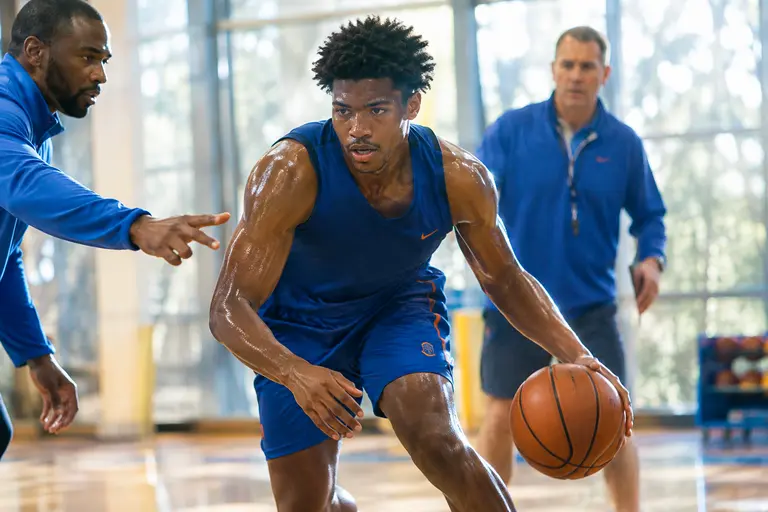
Florida’s continuity is one of the biggest reasons the matchup carries championship weight. The research notes list four returning starters from the 2025 NCAA Champions team: Thomas Haugh, Alex Condon, Rueben Chinyelu, and Boogie Fland. That group gives Florida a foundation of experience, frontcourt presence, and late-game familiarity.
Continuity does not guarantee clean basketball, but it can reduce panic. Against Duke, that matters. The Blue Devils have recently won the close moments in this series, and Florida’s returning players will have to show they can slow the game down when the crowd gets loud and every pass feels heavier.
Frontcourt Continuity And Guard Control
Haugh, Condon, and Chinyelu give Florida names to watch in the paint and on the glass. Rebounding will be one of the cleanest measures of whether Florida is playing with force. If Duke gets second chances, the game tilts. If Florida finishes possessions and runs with purpose, the O’Dome crowd becomes part of the pressure.
Fland’s role connects to tempo. Florida cannot treat pace as simply playing fast. Pace has to mean organized speed: early offense when it is available, patient spacing when it is not, and strong decisions after Duke changes matchups. In games like this, guards are not just scorers. They are traffic directors.
Why Gators vs Duke Matters In Gainesville
Gators vs Duke carries three layers for Florida basketball: historical rarity, championship validation, and community energy. The historical layer comes from Duke’s first trip to Florida’s home court since December 17, 1937. The validation layer comes from Florida entering the 2026-27 season at No. 1 while Duke opened at No. 2. The community layer comes from placing that test inside the O’Dome, where students, alumni, and local fans can help define the night.
For Florida, the opportunity is clear. The Gators do not need to chase the weight of the entire series. They need to win possessions, trust the returning core, and make Duke feel the difference between playing Florida on a neutral stage and playing Florida in Gainesville. That is where program history and present-day team identity meet, and that is why December 1, 2026, stands out on the Florida basketball calendar.