
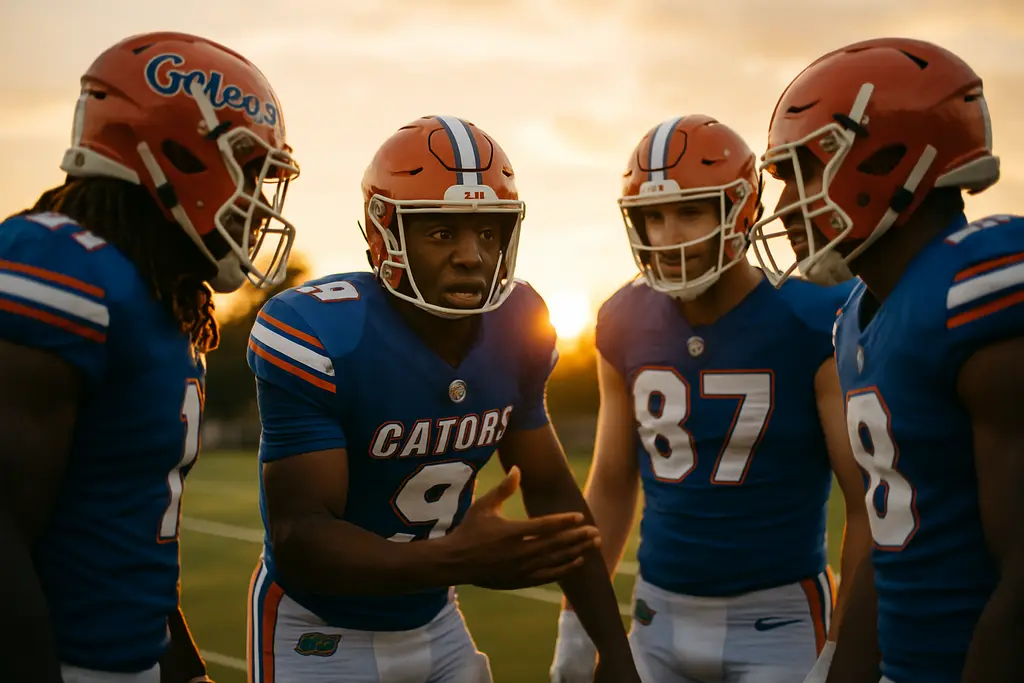

Gators Veterans gave Florida its spine during the 2025-26 men’s basketball season, and that matters even more now that the calendar has reached October 17, 2026. The SEC championship campaign is no longer a projection. It is a finished body of work, shaped by older players who carried real minutes, owned late-game possessions, and gave Todd Golden a steady foundation through a long league race.
In Gainesville, championship basketball has rarely been about one hot shooter or one loud March moment. It has been about connective tissue: the rebound that ends a run, the senior who knows where the next pass belongs, the big man who protects the paint without chasing numbers. That is why the return of Rueben Chinyelu, Thomas Haugh and Alex Condon became more than roster news. It became a statement about what Florida believed it could still build after a strong season that ended earlier than the group wanted.
How Gators Veterans Built The 2025-26 Standard
Florida’s best teams have usually had a grown-up quality. The 2025-26 group had that. Chinyelu, Haugh and Condon gave the Gators size, experience and production in roles that were not decorative. They were not simply older names on the roster sheet. They were the working parts of the team’s identity.
Gators Veterans And The Frontcourt Edge
Chinyelu’s season remains the cleanest example. He averaged 10.9 points and 11.2 rebounds per game in 2025-26, becoming the first Gator in 50 years to average double-digit rebounds, and he entered his senior return as the reigning National and SEC Defensive Player of the Year, according to the Florida announcement. Those numbers speak loudly, but his value was broader than the box score. A team can call more aggressive coverages when it trusts the last line of defense. Guards can pressure higher. Wings can jump passing lanes. A rebounder like that changes the geometry of the floor.
His rebounding volume was not a loose collection of missed shots falling into friendly hands. The research notes credit him with 137 offensive rebounds, 19 double-doubles and 393 total rebounds, the third-most in a UF season. That is possession control. That is how a good team becomes hard to move in January and February, when SEC games turn into trench fights.
Production With A Veteran Pulse
Haugh and Condon supplied the scoring and frontcourt balance around him. Haugh, as a junior in 2025-26, led Florida with 17.1 points per game and 33.3 minutes per game while earning First-Team All-SEC and second-team All-America honors. Condon averaged 15.1 points and 7.5 rebounds and was a third-team All-SEC performer. Together, they formed a veteran triangle with Chinyelu: one high-usage scorer, one productive interior piece, and one defensive anchor who could erase mistakes.
That mix helped explain why Florida could win with different game shapes. Some nights asked for pace. Others called for rebounding and half-court patience. Veteran teams tend to recognize the difference sooner. They do not need a timeout to feel the game bending. They can fix a possession in real time.
Retention Turned Success Into Stability
The most powerful roster move Florida made after the 2025-26 season was not an addition. It was the absence of departures from the top of the rotation. Chinyelu, Haugh and Condon all stayed rather than turn the page toward professional options, according to the research notes. That changed the feel of the program before the 2026-27 team ever played a game.
Florida returned four starters from its 2025-26 SEC championship team, along with 11 players from that squad, retaining over 80 percent of its scoring and nearly that much of its rebounding production, per the same official Chinyelu return report. Continuity does not guarantee another title, but it gives a coaching staff a different starting point. Instead of teaching every coverage from zero, the Gators could sharpen details. Instead of waiting for leaders to emerge, the room already knew who had carried weight.
That matters inside the O’Connell Center, and it matters across Gainesville. A fan base can feel the difference between a rebuild and a reload. Returning players give the community familiar faces. Families who watched the SEC run knew which players were coming back. Students had names to chant. Younger players in local gyms had frontcourt examples to study.
There is also a practice value that does not always show up in public conversation. A returning core raises the daily floor. When younger players have to score over Chinyelu, defend Haugh, or battle Condon for position, development becomes less theoretical. The veterans set the standard before the first exhibition whistle. That is why roster stability has become one of the defining themes around the program, a point that connects naturally with our deeper look at Gators roster stability.
What Summer Workouts Revealed About The Core
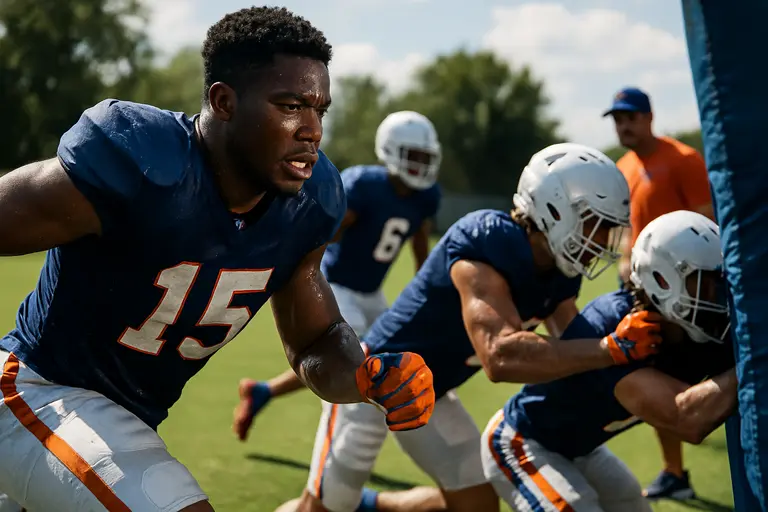
By June 8, 2026, Florida’s summer work had begun with a roster that still looked like a championship roster. The official summer workout report noted that the Gators returned six of eight primary rotation players and 11 total players from the prior season’s squad as workouts opened. That is not a small detail. June is where roles start to form long before fans see a rotation.
Why Familiarity Speeds Up Development
Teams with that much returning production can spend summer time differently. The first practices do not have to be consumed by introductions and basic terminology. Players know how the staff wants to defend ball screens. They know which bigs like touches on the block and which guards need an outlet after pressure. That type of shared language can save possessions in close games months later.
For the younger pieces on the roster, the return of the older core likely reduced confusion. Instead of guessing what the coaching staff values, they could watch it in the veterans. Rebound first. Defend with discipline. Move the ball with purpose. Accept that some winning plays are quiet. Those lessons sound simple from the seats, but they become powerful when taught by teammates who have already won an SEC championship.
The Standard In The Locker Room
Every locker room has a tone. Coaches can set it, but players carry it. Florida’s older group carried production and credibility. That is a rare combination. A veteran who talks but does not produce can be ignored. A scorer who produces but does not lead can leave gaps. Florida’s core had both the numbers and the standing to demand more from the room.
That is where Gators Veterans separated themselves. Their impact was not limited to points, rebounds or honors. They gave the staff a chain of command. They helped new and returning players understand what Florida basketball was supposed to look like after a title run: physical on the glass, mature in shot selection, and steady enough to absorb a road crowd without losing its shape.
Why Gators Veterans Still Set Florida’s Standard
The story now sits in two time frames. The 2025-26 SEC title belongs to the past, and it should be judged as a completed achievement. The 2026-27 season, as of October 17, 2026, is still the next test for this veteran-heavy group. That distinction matters. Florida has already banked one championship season with this core. What remains is whether the same maturity can carry the Gators through another demanding run.
There are no guarantees in college basketball, especially in a league where scouting catches up and every road trip has teeth. But Florida’s case is not built on guesswork alone. It is built on returning starters, returning production and older players who have already handled winning expectations. Chinyelu’s rebounding gives the Gators a physical identity. Haugh’s scoring gives them a late-clock answer. Condon’s interior production gives the frontcourt another proven layer.
For Gainesville, this is the kind of roster that invites real belief without needing empty noise. The names are known. The work is visible. The standard has been set. If Florida carries its 2025-26 lessons into 2026-27, Gators Veterans will remain the center of the story because they turned talent into trust, and trust is often what survives when a season gets hard.