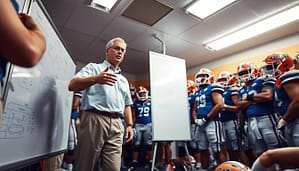
Some teams face challenges like a cat staring at a cucumber – pure confusion followed by frantic scrambling. Others meet challenges with the calm precision of a bomb disposal expert.
Ohio State’s four-game losing streak felt like academic probation for a basketball program. Then Thad Matta’s crew pulled off a turnaround that would make a NASCAR driver jealous.
On the other side, Florida’s coaching staff has been running more audibles than a rookie quarterback. Injuries and suspensions forced them to reinvent their playbook mid-season.
The real magic happens when teams master the art of the pivot. It’s not just about making changes – it’s about making the right changes at the exact moment they’re needed.
Can the Gators’ halftime strategy evolve faster than their opponents adapt? That’s the million-dollar question facing every team staring down a losing streak.
Strategic Changes
Florida’s coaching staff this season was like a group project where everyone missed the same point. The offense and defense didn’t work together smoothly. It was more like a chaotic jazz session.
Charlie Weis’s plan for a strong play-action passing game vanished quickly. The defense’s calls were confusing, making us wonder if it was Muschamp or Quinn in charge. After nine weeks, we’re not sure who’s calling the shots.
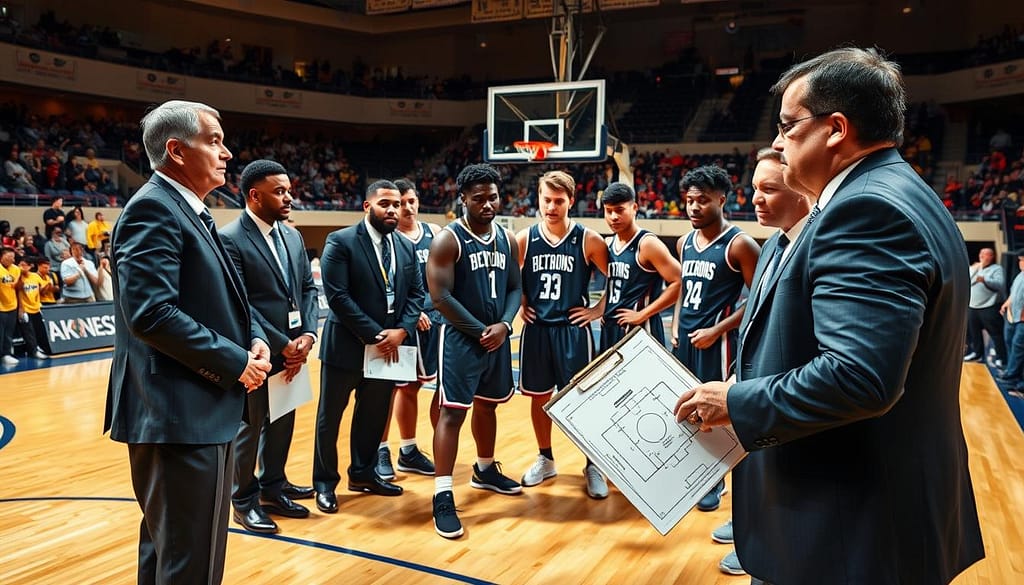
Real coaching changes mean more than just new plays. They’re about changing how everyone thinks. It’s like steering a ship away from danger, not just rearranging the furniture.
Top teams know that strategic changes need a clear plan. Everyone must work together, whether it’s calling plays or setting up defenses. When things don’t work together, the whole team suffers.
To learn more about effective halftime adjustments, check out our analysis of coaching strategies that succeed under pressure.
Florida’s struggles show us that without clear coaching, even great teams can falter. College basketball is like a chess game, where every move must be made with purpose, not just hoping for luck.
Locker Room Moments
Ever wonder what happens when the locker room door closes at halftime? It’s not like the movies with Gatorade coolers flying everywhere. The real story is a mix of psychology, strategy, and emotions.
Imagine Ohio State’s players staring at their cleats, looking puzzled. The air is so thick, you could spread it on toast. This is where coaching leadership turns from just managing to changing emotions.
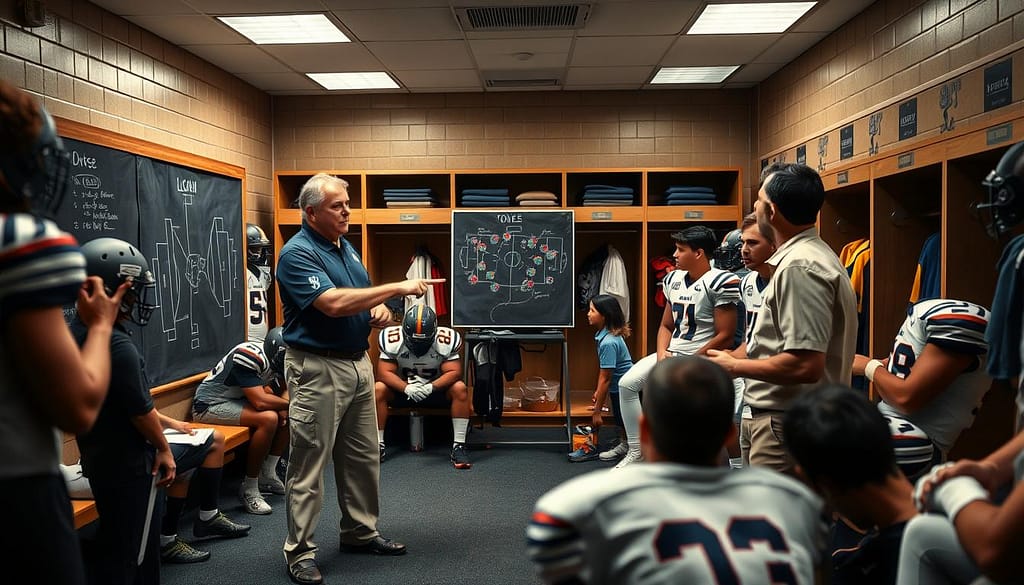
The magic isn’t in famous speeches. It’s in small changes, like an assistant coach listening more. Or a veteran player making a joke about the quarterback’s haircut. These moments build team resilience more than any playbook.
What makes a team great? Their halftime adjustments are more than just plays. They read body language like detectives. They know when to push and when to pull back. It’s like couples therapy with shoulder pads.
Here are key locker room elements that turn games around:
- The quiet player who speaks up
- Coaches who adjust their message for each player
- Honest feedback without personal attacks
- Just the right amount of tension to spark change
This process isn’t just for college football. The NFL halftime experience shows similar patterns at the professional level. The best leaders know that sometimes, the best move is to say nothing.
Player reactions during these moments tell a lot. Do they lean in? Do they make eye contact? Or are they already thinking about leaving? The answers decide if losing streaks continue or if comebacks start.
True team resilience isn’t built during winning streaks. It’s made in those fifteen minutes of halftime uncertainty. Where sweat and desperation mix with the chance for redemption. Where seasons are saved not by speeches, but by silence. Not by plays, but by presence.
Player Insights
What makes halftime adjustments truly great? It’s the players who turn from first-half struggles to second-half stars. Coaches can plan all they want, but it’s the athletes who make those plans come to life.
Take LaQuinton Ross against Illinois. He was invisible in the first half. But in the second, he became a superstar. It’s as if he remembered he was a basketball player.
Lenzelle Smith Jr. needed halftime to find his shooting touch. In the first half, he missed every shot. But in the second, he made every shot. It’s like he remembered his password after trying three times.
Rayvonte Rice sometimes played like his hands were buttered. He turned the ball over and missed easy shots. But halftime changed everything. He started handling the ball like it was glued to his hands.
Player development under coaching changes is not straightforward. It’s like a Jackson Pollock painting – full of brilliance and chaos. Some days, everything works perfectly. Other days, it’s hard to understand.
The key to great halftime adjustments is unlocking players’ natural abilities. They’re not about forcing players to fit into roles. They’re about finding the right fit for each player.
Injuries add complexity to this mix. A player might start cautiously after an injury. Halftime gives them time to assess and recover. Often, they return looking like new athletes. The mental shift is as important as the physical recovery.
These stories show that player development is messy and unpredictable. The best adjustments don’t try to change players. They help players find their best selves in the game.
Lessons for All Levels
Halftime adjustments are not just for big-time sports. They apply to any team, big or small. It’s about adapting, not giving up.
Leaders like Pat Summitt and Nick Saban show that being flexible is key. They know when to simplify, not complicate. When plans fail, they change direction.
This idea goes beyond sports to business and life. The power to adjust to win makes a leader stand out. It’s about understanding the situation, not just the plan.
Being adaptable is essential, whether in sports, business, or life. Those who can change easily succeed, while the rigid fail. Learning to adjust can be your biggest strength.
