
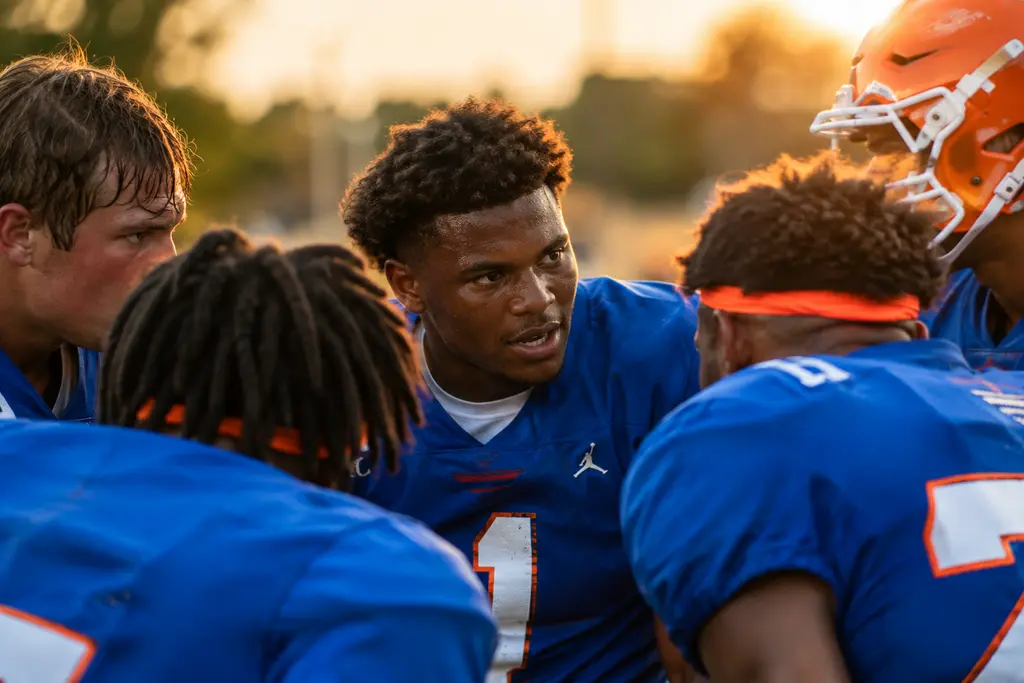

Gators Returning Players gave Florida’s 2026 football outlook a firmer base than a typical coaching transition would suggest. As of October 27, 2026, the full October record and late-season developments are not included in the supplied research, so this analysis stays with verified fall 2026 personnel notes and early-season results. The picture that emerged was clear: Florida had a proven lead back, young pass catchers with production already on tape, a mostly intact linebacker group, and a new coaching staff trying to build fast without pretending every position was settled.
Why Gators Returning Players Change The Outlook
Florida’s season outlook under Jon Sumrall was not built only on a new staff or a fresh system. It was shaped by how much production stayed in Gainesville after the 2025 season. That matters in the SEC, where a new quarterback, line turnover, and coordinator changes can test even talented rosters before conference play sharpens the margin for error.
The strongest part of the case starts with running back Jadan Baugh. He entered his junior season as Florida’s lead back after a 2025 sophomore year in which he earned an 89.5 PFF rushing grade and forced 65 missed tackles, eighth most nationally among FBS players, according to PFF’s 2026 Florida preview. Florida’s own position preview also framed the stakes around Baugh’s production: another 1,000-yard rushing season would make him the program’s first back to post back-to-back 1,000-yard seasons since 1992, according to Florida’s running backs preview.
That is not a small detail for a team breaking in a new quarterback. A back who can create after contact helps a play caller stay on schedule. A back who can punish light boxes changes how defenses treat early downs. For a community that has watched Florida search for steadier footing, returning production like that gives the Swamp a different kind of optimism: not noise, but evidence.
Returning Production On Offense
How Gators Returning Players Help The Quarterback
The quarterback position remained one of the biggest swing factors in the 2026 outlook. The research identified Florida as breaking in a new quarterback, which means the supporting cast carried extra weight. For Gators Returning Players on offense, the assignment was simple in theory and demanding in practice: reduce the burden on the passer before SEC defenses could force the issue.
Baugh was the first piece of that plan. His 2025 missed-tackle production showed more than burst; it showed contact balance, patience, and the ability to keep drives alive when blocking was not perfect. That trait became even more important because Florida lost its three highest-graded starting offensive linemen from 2025. The returning backfield could raise the offense’s floor, but the new line had to grow fast enough to keep that strength from being crowded by defensive fronts.
Receiver Continuity Around A New Starter
The receiver room gave Florida another reason to believe the transition did not have to stall. Vernell Brown III returned after leading the Gators in 2025 with 40 catches for 512 yards, plus 261 return-all-purpose yards. Dallas Wilson also returned after flashing with six catches, 111 yards, and two touchdowns against Texas before a season-ending injury. Eric Singleton Jr., a senior transfer from Auburn, brought a veteran profile with 162 career receptions, more than 2,000 receiving yards, and 12 receiving touchdowns.
That mix created a more balanced picture than simply saying Florida had talent outside. Brown supplied familiarity and return value. Wilson supplied a high-ceiling target whose Texas performance offered a clear sign of what he could become when healthy. Singleton supplied experience from another SEC stop. For a new quarterback, that trio mattered because trust often forms through repeated timing throws, contested catches, and receivers who can win without a perfect ball.
There was still a catch. Skill talent can soften a quarterback transition, but it cannot erase protection issues. Florida’s offensive line turnover made the run game and receiver timing even more connected. If Baugh demanded extra bodies near the box, the receivers could find space. If protection held long enough for developing routes, the quarterback had options. If the line struggled, even returning stars would have to win faster and with less room for error.
Defensive Continuity And Pressure Points
Linebackers Set The Defensive Floor
Defensively, the cleanest continuity appeared at linebacker. The group returned 1,605 of 1,641 snaps from 2025, close to 98 percent of its production. Myles Graham was the headliner after leading the team with 76 tackles while adding eight quarterback hurries, seven tackles for loss, two sacks, and pass breakups. Jaden Robinson and Aaron Chiles also remained part of that returning core.
That kind of continuity does not guarantee dominance, but it can set the communication floor for a defense. Linebackers often serve as the bridge between the front and secondary. They fit the run, carry coverage assignments, adjust to motion, and clean up mistakes before short gains become explosive plays. Under defensive coordinator Brad White, having returning players in the middle of the field gave Florida a better chance to install standards without starting from scratch.
Front And Secondary Questions
The defensive front brought back 13 of 21 edge rushers and defensive linemen, accounting for 57 percent of the 2025 defensive line snaps. Jayden Woods, who moved from true freshman to sophomore, co-led the team with 3.5 sacks in 2025. Depth pieces such as McCloud, Lyons, and LJ McCray were positioned to take on more work.
The secondary had a veteran anchor in Bryce Thornton, identified in the research as Florida’s highest-graded returning defensive player. His experience included more than 1,400 snaps across the previous three seasons, four interceptions, and 10 pass breakups. That background mattered because the Gators did not only need athleticism in coverage; they needed reliable eyes, route recognition, and a steady voice when the pass rush did not arrive cleanly.
Put together, the defense had a clear shape: linebacker continuity, a front with returning pieces but some open snaps to replace, and a secondary led by a seasoned defender. The question was not whether Florida had known names. The question was whether those names could tighten the gap between promising personnel and SEC-level week-to-week consistency.
What The Opener Showed
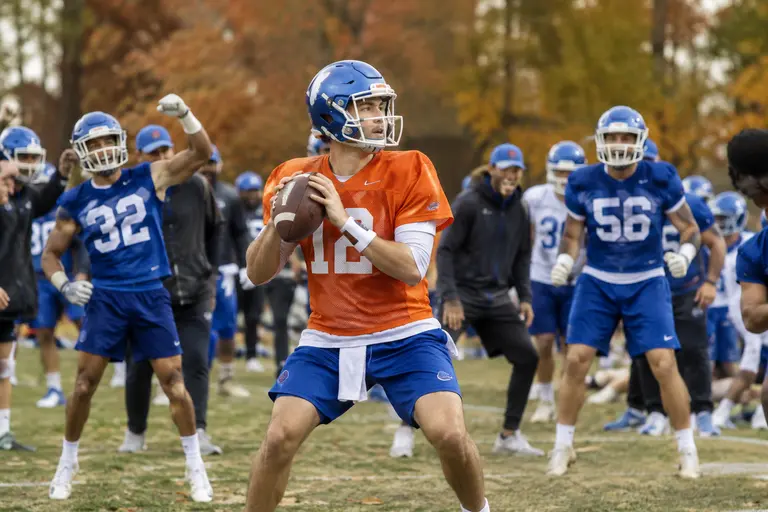
The season opener against FAU gave Florida a strong early data point. The Gators scored 66 points, their most in a season opener since 1994. Baugh ran for 160 yards and three touchdowns, while Vernell Brown III produced 117 receiving yards. Those numbers did not settle every concern, but they showed why returning skill players were central to the outlook.
Early games can mislead if treated as full proof, especially before a team faces the deepest part of its league schedule. Still, the opener mattered because the strengths identified in preseason showed up on the field. Baugh was not just a name on a depth chart. Brown was not just a returning receiver with past production. Their performances gave Florida something tangible to build from as the staff moved toward tougher tests.
For Gainesville, that kind of opening also has a community pull. Strong early offensive play changes the mood around campus, around family tailgates, and in the local football conversation. It gives students and alumni a roster to recognize, not just a coaching reset to discuss. That same theme connects with broader Florida roster stability across sports, a topic our site has tracked in Gators roster stability coverage.
Why Gators Returning Players Matter In Gainesville
The value of Gators Returning Players in 2026 was not only statistical. It was cultural and practical. A new head coach, new coordinators Buster Faulkner and Brad White, and NFL veteran general manager Dave Caldwell gave Florida a different leadership structure after the 2025 season. Returning production made that transition less abstract. Players who had taken SEC snaps could model practice habits, carry meeting-room language, and give younger teammates a reference point.
The outlook still carried real caution. Florida had to replace top offensive line production. The quarterback adjustment was a genuine variable. The defensive front had returning pieces, yet it still needed expanded contributions from players moving into larger workloads. Those are not small concerns in a league that punishes weak spots quickly.
Yet the reason this roster had a more grounded outlook was simple: proven players stayed. Baugh offered a rushing identity. Brown, Wilson, and Singleton gave the passing game multiple paths. The linebackers brought rare snap continuity. Thornton gave the secondary experience. As of the verified fall 2026 research, Florida’s best case was tied less to mystery and more to whether its returning core could keep setting the pace while the new pieces caught up.