
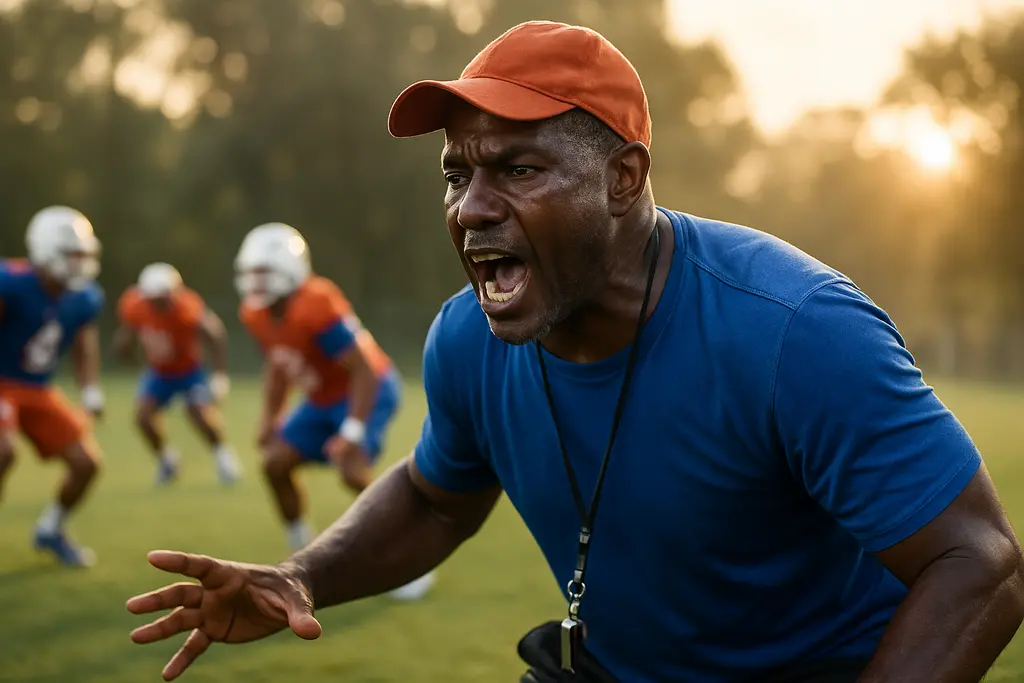

Gators Fall Practice in August 2026 was more than a calendar marker for Florida football. It was the first full public sign of how first-year head coach Jon Sumrall wanted to answer a 4-8 record in 2025: with strength, speed, accountability and a sharper daily standard in Gainesville.
Fall camp can sound routine from the outside. Helmets come out, position groups rotate, coaches bark corrections, and every program says it is starting fresh. But Florida’s reset carried a different weight because the Gators were not protecting momentum. They were trying to build it from the ground up after a hard season. Sumrall’s first camp opened on August 4, 2026, and the early numbers told a simple story: this staff wanted a more physically prepared roster before it chased a better result on Saturdays.
The clean read from camp was that Florida’s edge was not tied to one speech or one position battle. It was built through the weight room, sprint testing, player-led demands and the willingness to evaluate availability honestly. That is where a team starts when it has to earn trust again with its locker room and with a fan base that knows the standard.
Gators Fall Practice Set The Tone After 2025
Florida opened camp on August 4, 2026, under Sumrall, who took over a team coming off a 4-8 season. WRUF reported that the Gators entered camp with urgency around culture and player-led accountability, and that the offseason strength program under Director of Football Performance Rusty Whitt produced nearly 14,000 pounds of total gains across the power clean, bench press, squat and deadlift WRUF camp report.
What Gators Fall Practice Revealed About Standards
That strength number matters because it gave Sumrall something real to point to before Florida ever lined up for the season. Coaches talk about buy-in all the time, but weight-room progress is one of the few offseason markers that can be measured across an entire roster. It does not guarantee wins. It does show who trained, who responded to the new staff, and who could handle a harder daily workload.
For a team trying to move past a 4-8 year, that kind of shared physical work can carry more value than a slogan. Linemen need power to hold ground. Skill players need enough strength to stay balanced through contact. Defensive backs and linebackers need repeat force late in practice, not just in early drills. The four major lifts cited from the offseason program do not cover every football movement, but they do give a strong snapshot of how serious Florida was about changing the base of the team.
Why Accountability Had To Be Player-Led
Sumrall’s emphasis on player-led accountability also fits the moment. A new head coach can set the tone, but players have to enforce it when coaches are not in the huddle. That is especially true in camp, when fatigue can reveal habits. Missed alignments, slow transitions and poor practice tempo are not small details for a team trying to flip its record. They become the cracks opponents attack later.
From a community view, this is where Gainesville watches closely. Gators supporters can live with a build if they see purpose. They know a program does not recover from 4-8 just by changing the voice at the podium. It recovers through the daily work that players accept and repeat.
Strength And Speed Became The First Edge
The speed testing from the offseason added another layer to Florida’s camp story. WRUF reported that 56 players topped 20 mph during testing before camp opened. That figure does not name a depth chart, but it does suggest Florida had a broad base of functional speed across the roster.
Speed is not just a wide receiver talking point. It affects pursuit angles on defense, kickoff and punt coverage, screen blocking, red-zone spacing and the ability to finish explosive plays. If 56 players crossed that 20 mph mark, the coaching staff had reason to push competition across more than the obvious skill positions. It also meant practice could be fast enough to test decision-making, which is often where fall camp separates prepared teams from talented ones.
How Speed Changes Practice Pressure
Fast practices force quarterbacks to process sooner, backs to hit lanes with less hesitation, and defenders to communicate before the snap instead of chasing after it. That pressure is useful in August because it creates mistakes the staff can correct before they become game-day problems. For Florida, the value was not just having fast players. It was using that speed to raise the strain of every rep.
Gators Fall Practice carried that idea through the full roster. The competitive edge came from stacking physical traits with repeatable habits. Strength without tempo can turn into slow football. Speed without discipline can turn into missed fits. The camp goal was to pull those traits together in a way that showed up across position groups.
The Weight Room Was The First Message
Whitt’s offseason program gave the staff a measurable starting point. Nearly 14,000 pounds added in the four main lifts is not a scoreboard, but it is a team-wide receipt. It shows a roster that spent the offseason preparing to handle contact and workload. In the SEC, where line play and late-game physical strain can decide close contests, that foundation has to be built before September.
The smart part of this camp story is that Florida did not need to pretend strength numbers were the whole answer. They were the first answer. The next steps were staying healthy enough to keep competing, identifying dependable depth, and turning physical progress into cleaner football.
Early Absences Tested Depth And Patience
Fall camp also brought reminders that development rarely moves in a straight line. At Practice Report No. 1 on August 5, tight end Jaylen Jordon, offensive lineman Jahari Medlock, cornerback Javian Toombs and safety Kaiden Hall were rehabbing indoors because of minor ailments, according to Sports Illustrated’s practice report SI practice report.
Those names mattered because August availability shapes the bottom half of a depth chart as much as the top. A limited player can still learn from meetings and walk-through work, but missed field reps create openings for others. That is part of camp competition. The team gets a better look at backups, young players hear more coaching, and position rooms learn how thin or deep they truly are.
Florida’s staff had to balance urgency with patience. Pushing too hard too early can cost a team bodies. Backing off too much can leave it underprepared. The reported indoor rehab group gave the Gators a chance to evaluate how the next players responded. That matters in a league where the second and third options often decide whether a team survives injuries and schedule pressure.
For fans, this is the part of camp that can be hard to measure from a distance. A player not practicing fully is not always a crisis. It can be caution, recovery or a short delay. The key is whether the program keeps teaching, keeps reps competitive, and does not let uncertainty stall the room.
- Strength gains showed offseason response to a new staff.
- Speed testing suggested useful athletic depth across the roster.
- Early rehab cases created more evaluation chances for backups.
Why Gators Fall Practice Matters In Gainesville
The bigger story from August 2026 was not that Florida solved every question in camp. The supported facts do not say that. What they do show is a program trying to create an edge through measurable physical gains and a harder standard after a losing season. That is a practical starting point, and for a Gators community that cares deeply about the fall, practical progress matters.
Gainesville has always treated football Saturdays as more than three hours on a field. Local businesses feel the rhythm. Families plan around kickoff days. Former players watch for signs that the standard still means something. Students inherit the mood of the program each fall. When camp opens with a new coach after 4-8, the question is not just who starts. It is whether the whole operation feels more serious.
That is why Gators Fall Practice carried real weight in 2026. Sumrall’s staff had to show that Florida was not just talking about a reset. The offseason strength gains, the 20 mph speed group and the early attention to accountability gave the program a credible base. The next test was turning that base into cleaner execution after camp ended.
No August report can promise what a season becomes. But camp can show whether a team has started the right fight. Florida’s August work showed a roster being pushed to get stronger, run faster, compete deeper and answer the disappointment of 2025 with visible work. For the Gators, that was the competitive edge worth tracking.