
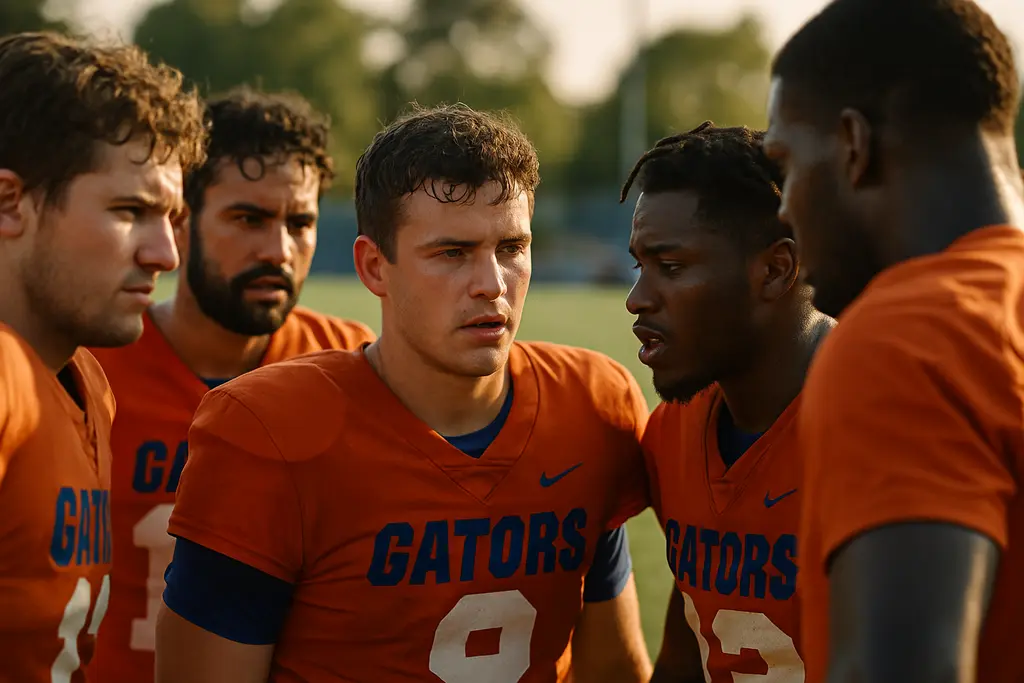

Gators Core Players became the center of Florida’s title-defense plan after the 2025 season, when new head coach Jon Sumrall had to protect the parts of the roster that already carried SEC-level production. In a sport where transfer movement can strip a locker room in weeks, Florida’s ability to keep proven players gave the program a real starting point for 2026.
The names mattered because they were not abstract roster pieces. Running back Jadan Baugh had already produced a 1,000-yard season. Vernell Brown III had already shown he could affect receiving, returns, and all-purpose field position. Dallas Wilson had flashed big-play ability before injury limited his freshman season. Myles Graham and Jayden Woods gave the defense young, physical anchors at linebacker and edge. For a new staff, that kind of returning spine can narrow the gap between teaching a system and competing with confidence.
Why Gators Core Players Anchored Sumrall’s Plan
Florida’s title defense began with retention because Sumrall inherited a roster that had already identified its most valuable young pieces. The official Florida athletics report named five players the Gators viewed as essential to keep for 2026: Baugh, Brown, Wilson, Graham, and Woods, as detailed by Florida’s core retention breakdown. That list framed the early Sumrall era around continuity rather than a full reset.
Gators Core Players Who Had To Stay
The Gators Core Players group touched every major phase of the roster. Baugh gave Florida a proven runner. Brown gave the offense and return units a multi-use playmaker. Wilson gave the passing game size and vertical promise. Graham gave the defense a tackling leader. Woods gave the front a young edge presence. That balance matters for a coach taking over because leadership cannot come from one meeting room alone.
Florida’s challenge was not only keeping star potential. It was keeping players who had already been asked to handle real pressure inside the SEC. Retention meant Sumrall could build standards through players who understood the pace of Florida’s week-to-week demands. It also meant younger teammates had examples beside them in position drills, film sessions, and game preparation.
Production That Carried Into 2026
Baugh’s 2025 season gave the Gators their clearest offensive foundation. He rushed for 1,170 yards and eight touchdowns, including a 266-yard, two-touchdown performance against Florida State on November 29, 2025, and became Florida’s first 1,000-yard rusher in 10 years, according to the Miami Herald’s roster report. That is not just a box-score note. A runner with that level of production changes how an offense can handle third downs, road environments, and tempo swings.
Brown’s return also reduced uncertainty. The Miami Herald reported that he led Florida with 512 receiving yards as a freshman and became the first player in SEC history to earn Freshman All-SEC honors in three categories: wide receiver, return specialist, and all-purpose. For a new staff, that versatility is the kind of tool that can support several game plans without changing personnel packages every series.
Wilson’s case was different but still significant. At 6-foot-3 and 213 pounds, he had six catches for 111 yards and two touchdowns against Texas in 2025 despite playing only four games because of injury. Keeping him meant Florida preserved upside in the receiving room, especially when paired with Brown’s proven freshman production.
Offensive Continuity And Community Confidence
Gainesville responds to players it can grow with. That is true in basketball at Exactech Arena, and it is true on football Saturdays. When fans can identify the returning faces who carried the previous season, the connection between team and community strengthens. The Gators did not ask supporters to learn an entirely new offensive identity from scratch in 2026. They brought back the runner, receivers, and skill-position talent that had already given the program visible direction.
Baugh’s Standard In The Backfield
Baugh’s return offered more than yardage. It gave Florida a physical tone. A back who led the team in rushing as a freshman with 673 yards, then followed with a 1,170-yard season, gave the coaching staff a reliable offensive reference point. That matters for player development because young linemen, quarterbacks, and receivers all benefit from a run game that can stay on schedule.
The Gators Core Players discussion starts with Baugh because a title defense often gets tested first by down-to-down consistency. Explosive plays win headlines, but a reliable run game can quiet a stadium, protect a defense, and help a first-year head coach manage momentum. Sumrall’s staff had plenty to install, but a proven back allowed Florida to build around a known strength.
Receiving Room Keeps Its Edge
Brown and Wilson gave Florida two different receiver profiles. Brown had already shown volume, special teams value, and open-field skill. Wilson had shown size and scoring potential in a limited sample. Together, they gave the Gators a blend of dependability and projection, which is exactly what a new offensive structure needs.
That balance also fits the wider Gainesville sports identity. Florida fans have watched title-level teams, in multiple sports, rely on player growth rather than constant reinvention. For readers tracking how continuity protects championship standards across campus, the same principle is examined in this look at Gators team stability.
Defensive Returners Gave Sumrall A Starting Point
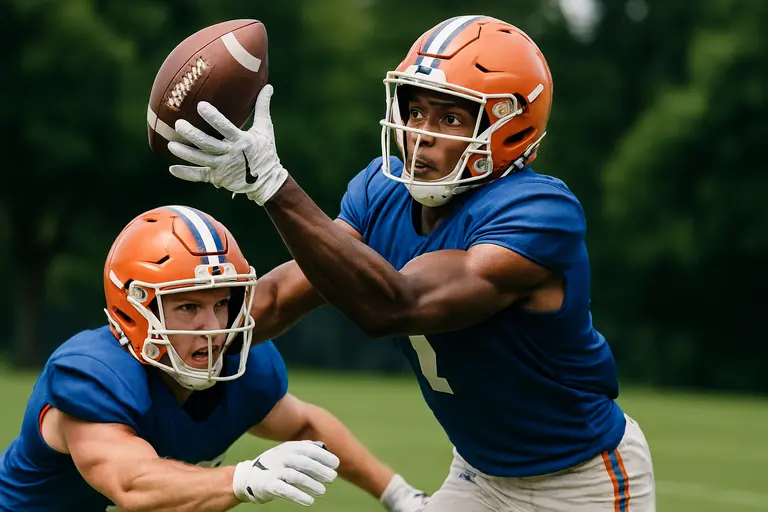
Defense is where retention can show up fastest under a new head coach. Communication, tackling angles, pass-rush discipline, and coverage fits all depend on trust. Florida’s return of Graham and Woods gave the staff two young defenders who had already played meaningful football, while the broader defensive front and linebacker rooms brought back significant snap experience from 2025.
Graham’s Leadership At Linebacker
Graham returned for his junior season after leading Florida with 76 tackles in 2025. His stat line also included 7.5 sacks, eight quarterback hurries, seven tackles for loss, and four pass breakups. That profile gave the Gators more than a tackle collector. It gave them a linebacker who could affect pressure, coverage, and run fits.
At linebacker, Florida returned about 98 percent of its 2025 snaps, with 1,605 of 1,641 snaps coming back. Jaden Robinson and Aaron Chiles were among the returners beyond Graham who had meaningful roles. That kind of continuity can shorten teaching time because players are not learning college speed and staff expectations at the same time.
Woods And The Front Mechanics
Woods gave Florida another important piece. As a true freshman in 2025, he co-led the team with 3.5 sacks, recorded 28 tackles, had five tackles for loss, and played 448 snaps. Young edge defenders often need time to learn how to set an edge, rush with a plan, and stay disciplined against misdirection. Woods had already gained that experience before Sumrall’s first season.
The defensive line picture also supported the staff’s transition. Florida returned 13 of 21 edge and interior linemen from 2025, and those returners accounted for 57 percent of defensive line snaps. Under defensive coordinator Brad White, that gave the Gators a base for pass-rush and run-defense growth without forcing every role to be rebuilt at once.
What Returning Core Players Mean For Florida’s Title Defense
The importance of returning talent is easy to say and harder to live. Coaches still have to blend old habits with new terminology. Veterans still have to earn their roles. Young players still have to improve. Yet Florida’s retention of Baugh, Brown, Wilson, Graham, and Woods gave Sumrall a clearer path than a roster overhaul would have offered.
Coaching Legacy Built Through Retention
For Gators Core Players, the 2026 title-defense story was about responsibility as much as opportunity. They were not merely returning to repeat what had already worked. They were returning to help a new staff set standards, protect locker-room belief, and carry production into a season with fresh demands.
That is where coaching legacies are often shaped. A coach can design a plan, but returning leaders give that plan a voice inside the team. Sumrall’s first Florida roster had that voice in multiple rooms: Baugh in the backfield, Brown and Wilson among the receivers, Graham at linebacker, and Woods on the edge. In a community that treats Gators success as a shared point of pride, that continuity gave fans a team they could recognize and a title defense built on players who had already earned trust.